

Do Bunion Splints Work? What the Evidence Really Says
Nearly 1 in 4 adults under 65 suffers from bunions — and most of them will try a splint before anything else. It makes sense: bunion splints are affordable, widely available, and marketed as a painless fix. But do bunion splints work the way most people hope? The short answer is: partially, and only temporarily.
Splints can reduce friction and ease overnight discomfort. What they cannot do is correct the underlying bone misalignment driving your pain. Understanding that distinction is what separates short-term relief from a real long-term management strategy — and that's exactly what this guide covers.
What Is a Bunion?

A bunion — clinically known as hallux valgus — is a progressive structural deformity of the foot. It occurs when the first metatarsal bone gradually drifts outward while the big toe angles inward toward the smaller toes. Over time, this misalignment creates the characteristic bony bump at the base of the big toe joint.
Bunions are not simply caused by bad footwear. Genetics play a dominant role — if your mother or grandmother had them, your risk is significantly higher. Flat feet, hypermobile joints, and abnormal gait mechanics are also contributing factors. Tight shoes accelerate the progression, but they rarely cause it from scratch.
This matters because it reframes the entire conversation around treatment: you are dealing with a bone and joint problem, not a soft tissue one. Any device that only acts on soft tissue — like a splint — will always have structural limits.
How Do Bunion Splints Work?
Bunion splints are passive orthopedic devices designed to hold the big toe in a more neutral position. They work by applying gentle pressure on the soft tissues surrounding the first metatarsophalangeal (MTP) joint — the knuckle at the base of your big toe. There are three main types, each with a different use case:
- Night splints use rigid straps to hold the toe straight while you sleep. They are the most common form and the one most frequently marketed as a "corrector."
- Toe spacers are small silicone or gel inserts placed between the big toe and the second toe during the day. They reduce friction and prevent the toes from overlapping.
- Bunion braces provide lightweight support during walking. They offer mild compression and some positional guidance, but limited mechanical correction.
All three work on the same principle: repositioning the toe passively through external force. The critical limitation is that this repositioning only lasts as long as the device is worn. The moment it comes off, the structural forces acting on your foot — your weight, your gait, your bone alignment — immediately pull the toe back into its deviated position.
Do Bunion Splints Actually Work? What the Evidence Shows

This is where honest, evidence-based guidance matters most — because the marketing around bunion splints rarely matches the clinical reality.
A 2018 review published in the Journal of Foot and Ankle Research found that while splints and toe spacers could measurably reduce pain scores in the short term, no conservative device demonstrated the ability to correct hallux valgus angle over time. Pain relief, yes. Structural correction, no.
Here is what bunion splints can realistically do:
- Reduce nighttime discomfort by keeping the joint in a less inflamed position during rest
- Decrease friction inside shoes when toe spacers are used during the day
- Improve short-term mobility around the MTP joint by gently stretching surrounding soft tissue
- Support post-surgical recovery by maintaining alignment while bones and ligaments heal
Here is what they cannot do — regardless of price point or brand claims:
- Reduce the hallux valgus angle permanently
- Realign the first metatarsal bone
- Prevent the bunion from progressing over months and years
- Deliver lasting pain relief once removed
Think of it this way: wearing a bunion splint is like pressing a dent out of a car door with your hand. The moment you let go, the metal springs back. The underlying structure was never changed — only temporarily displaced.
Do bunion splints work as a cure? No. As a short-term comfort tool? Yes — with realistic expectations.
When Are Splints Worth Using?
Despite their limitations, bunion splints are not useless. There are specific situations where they provide genuine value — as long as expectations remain realistic.
- Early-stage bunions (hallux valgus angle under 15°: are the best candidates for splint use. At this stage, the deformity is mild, the soft tissues are still relatively flexible, and consistent overnight splinting may help slow progression — not reverse it, but slow it.
- Post-surgical recovery: is arguably where splints deliver their highest value. After a bunionectomy or minimally invasive correction, the bones and ligaments are in an active healing phase. A splint helps maintain the corrected position during this window, reducing the risk of the toe drifting back before full tissue stabilization.
- Occasional pain flare-ups: are another valid use case. If you have a long day on your feet, a toe spacer worn inside a wide-toe box shoe can meaningfully reduce joint pressure and friction throughout the day.
What splints should never be used as is a substitute for addressing the biomechanical root cause. If your gait mechanics, foot posture, or footwear are actively worsening your bunion, no amount of nightly splinting will counteract that daily stress. That is where a more comprehensive approach becomes necessary.
What Actually Works: Non-Surgical Solutions for Bunion Pain
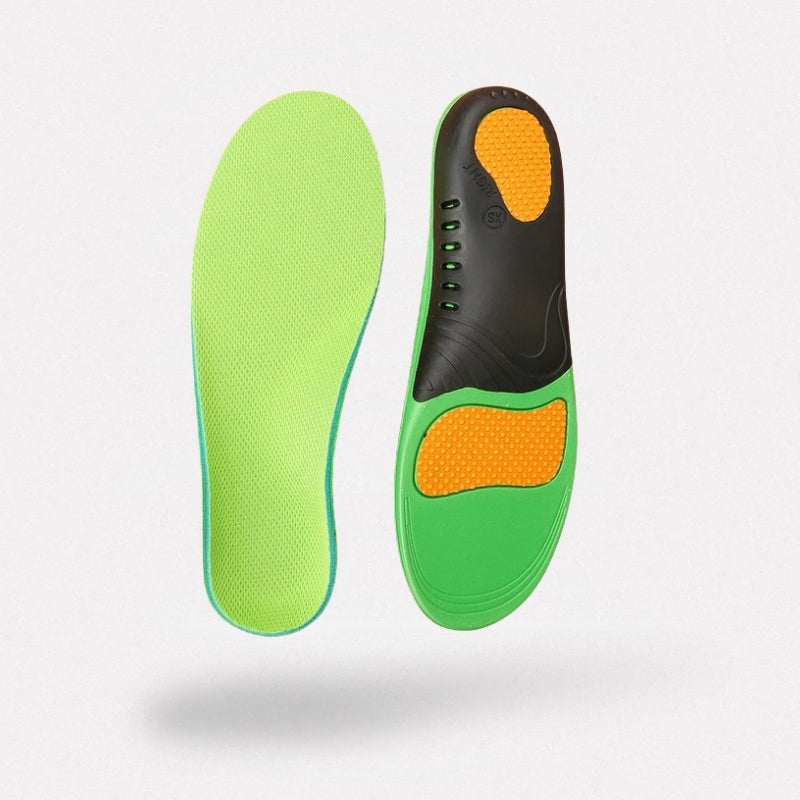
If splints only address soft tissue temporarily, the logical question becomes: what conservative approach actually makes a difference day to day? The answer lies in targeting the biomechanical forces that load the MTP joint with every single step you take. Here are the non-surgical solutions with genuine clinical support:
Orthopedic Insoles
The most effective daily intervention for bunion pain management. Unlike splints worn at rest, insoles work while you walk — redistributing plantar pressure away from the first metatarsal head and reducing the lateral drift force on the big toe during gait. Semello's Orthopedic Insoles for Bunions are specifically engineered to offload the MTP joint during daily activity, addressing the mechanical environment that drives bunion progression.
Wide Toe Box Footwear
Narrow shoes compress the forefoot laterally, accelerating metatarsal drift. Switching to shoes with adequate toe splay removes a major daily aggravating factor.
Targeted Foot Exercises
- Towel scrunches to strengthen intrinsic foot muscles
- Toe abduction resistance training to counter lateral drift
- MTP joint mobilization to maintain flexibility and range of motion
Anti-Inflammatory Management
- Topical NSAIDs applied directly to the MTP joint
- Ice application for 15 minutes after prolonged activity
- Strategic rest periods during high-load days
None of these solutions correct a bunion structurally. But used consistently together, they can significantly reduce pain, slow progression, and improve your quality of life without surgery.
Splints vs. Orthopedic Insoles: Which One Should You Choose?
A common source of confusion is treating these two options as interchangeable. They are not — they act on different mechanisms, at different times, with different outcomes.
|
Bunion Splints |
Orthopedic Insoles |
|
|
Worn when? |
Night / rest only |
All day, inside shoes |
|
Acts on |
Soft tissue position |
Gait biomechanics |
|
Pain relief |
Temporary |
Daily, cumulative |
|
Slows progression? |
Marginally |
More effectively |
|
Corrects bunion? |
No |
No |
|
Best for |
Early stage, post-surgery |
Daily pain management |
The practical takeaway: splints and insoles are not competitors — they are complements. A night splint can reduce overnight inflammation while an orthopedic insole manages the mechanical load during the day. Used together, they cover the full 24-hour cycle of stress on the MTP joint.
Do bunion splints work better than insoles? No — they work differently. Splints address positional comfort at rest. Insoles address the biomechanical forces that actually drive the condition forward. If you can only choose one, prioritize what happens when you are on your feet.
When to See a Doctor?
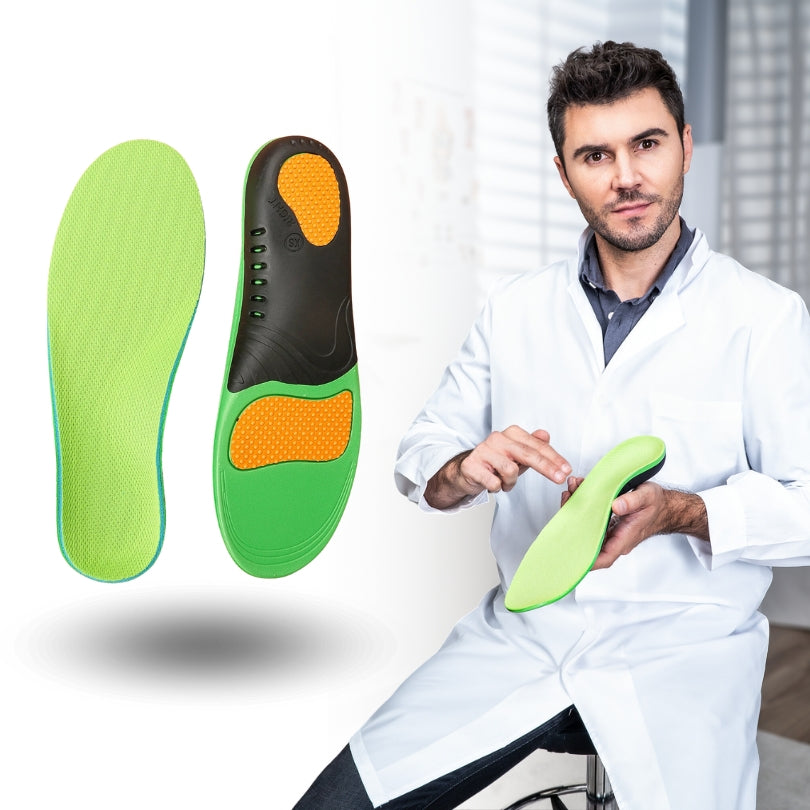
Conservative management — insoles, wide footwear, exercises, and splints — is appropriate for mild to moderate bunions. But there are clear clinical signals that indicate it is time to seek professional evaluation:
- Persistent pain that does not respond to any conservative measure after 8 to 12 weeks
- Hallux valgus angle above 25°, which typically indicates a moderate to severe deformity unlikely to be managed with devices alone
- Joint stiffness or rigidity that limits your ability to push off normally when walking
- Secondary deformities developing, such as hammertoe or overlapping toes caused by the bunion's progression
- Skin breakdown or bursitis over the bunion prominence due to constant shoe pressure
At this stage, a podiatrist or orthopedic foot specialist will assess your hallux valgus angle via X-ray, evaluate joint mobility, and discuss whether surgical correction is appropriate. Modern minimally invasive bunionectomy techniques offer significantly faster recovery than traditional open surgery — most patients walk the same day.
Seeking professional advice early is always better than waiting until the deformity becomes severe. The more advanced a bunion, the more complex the correction required.
Your Best Strategy Against Bunion Pain
Do bunion splints work? Yes — but within strict limits. They are a legitimate comfort tool for early-stage bunions and post-surgical recovery. What they are not is a corrective solution. No splint, brace, or toe spacer can realign bone, reverse structural drift, or deliver lasting relief once removed.
The most effective non-surgical approach combines what splints cannot offer: biomechanical correction during daily activity. Orthopedic insoles address the root mechanical forces driving your bunion forward with every step. Paired with appropriate footwear and targeted exercises, they form the backbone of a genuinely effective conservative management plan.
Do bunion splints work as your only solution? Unlikely. Do they have a place within a broader strategy? Absolutely — especially at night, or during post-operative recovery.
Start with the right foundation. Semello's Orthopedic Insoles for Bunions are designed specifically to reduce MTP joint pressure during the activities that matter most — walking, standing, and living without pain holding you back.