

Best Orthotic Arch Support Insoles: Expert Picks for Pain Relief
Foot pain, poor posture, and fatigue are among the most common musculoskeletal complaints worldwide. According to the American Podiatric Medical Association, nearly 75% of adults will experience foot-related issues at some point in their lives, often linked to insufficient arch support or improper footwear. This is where orthotic arch support insoles become essential. Designed to support the foot’s natural arch, improve biomechanical alignment, and redistribute pressure, these insoles can significantly reduce discomfort in the heels, arches, and forefoot.
Unlike standard cushioning inserts, orthotic arch support insoles provide structured correction rather than simple comfort. They are commonly recommended for conditions such as plantar fasciitis, flat feet, and chronic overpronation. In this expert guide, we will break down the best options available on the market and explain exactly how to choose the right pair based on your foot type and daily activity needs.
7+ Best Orthotic Arch Support Insoles
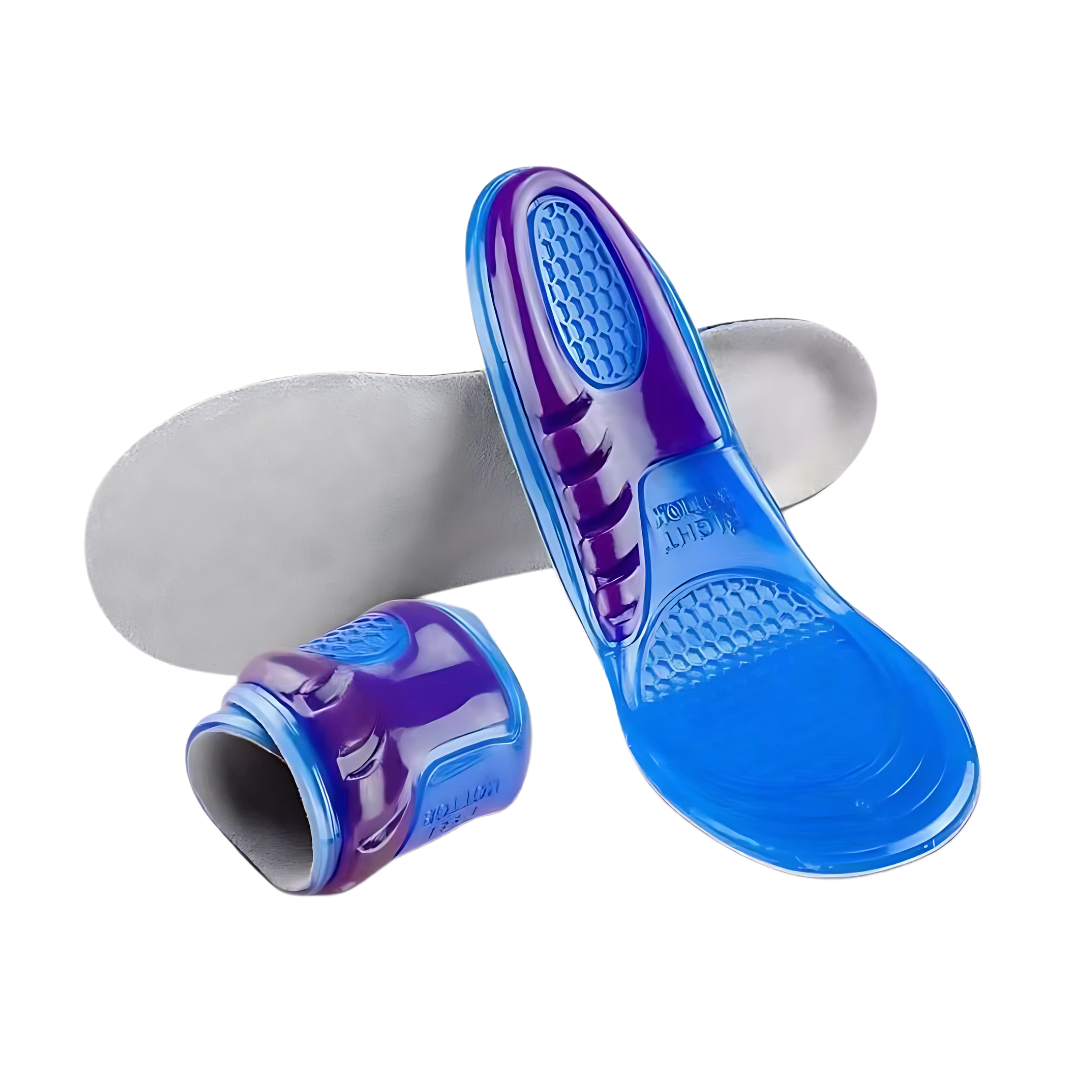
Choosing the right orthotic arch support insoles depends on foot condition, activity level, and required support intensity. Below is a structured expert selection designed to match the most common foot pain profiles.
1. Heel Spur Insoles – Heel Pain Relief
Designed to reduce excessive pressure on the heel bone, this insole combines targeted cushioning with structured arch support. It helps absorb shock during walking and standing.
- Benefit: Significant heel pressure reduction and pain relief during daily activities
- User type: People suffering from heel spurs or chronic heel pain
- Differentiator: Focused heel offloading system for localized relief
2. Plantar Fasciitis Insole – Daily Comfort
This model features deep heel support and reinforced arch structure to reduce strain on the plantar fascia. It improves foot alignment and reduces morning heel pain.
- Benefit: Reduced plantar fascia stress and improved walking comfort
- User type: Users with plantar fasciitis or early-stage heel pain
- Differentiator: Combination of heel stabilization and arch reinforcement
3. Orthopedic Insoles for Plantar Pain
Built for general plantar discomfort, this insole distributes pressure evenly across the foot while maintaining moderate arch support. It enhances long-term walking stability.
- Benefit: Balanced pressure distribution and reduced foot fatigue
- User type: Individuals with general plantar foot pain or overuse injuries
- Differentiator: Full-foot support system rather than localized cushioning
4. Orthopedic Insoles for Bunions
Designed to reduce forefoot compression, this insole improves toe alignment while maintaining structured arch support. It helps minimize irritation in the bunion area.
- Benefit: Reduced forefoot pressure and improved toe positioning
- User type: People suffering from bunions or forefoot pain
- Differentiator: Forefoot pressure relief zone with alignment control
5. Elite Performance Carbon Insoles
Made for athletes, this high-performance insole uses carbon fiber technology for maximum stability and energy return. It ensures strong arch support without unnecessary bulk.
- Benefit: Enhanced stability and improved athletic performance
- User type: Athletes and high-intensity users
- Differentiator: Lightweight carbon structure with rigid biomechanical support
6. Flat Foot Arch Support Insole
Engineered for fallen arches, this insole provides strong medial arch correction to reduce overpronation. It helps restore natural foot alignment during movement.
- Benefit: Improved posture and corrected foot alignment
- User type: People with flat feet or overpronation issues
- Differentiator: High arch reinforcement for structural correction
7. Gel Comfort Absolute Insole
Focused on cushioning comfort, this insole uses gel technology combined with moderate arch support. It is ideal for reducing daily impact stress.
- Benefit: Increased comfort and shock absorption
- User type: Users prioritizing comfort over rigid correction
-
Differentiator: Soft gel cushioning with flexible arch support

What Are Orthotic Arch Support Insoles?
Orthotic arch support insoles are specially engineered foot inserts designed to support the natural curvature of the foot and improve overall biomechanical alignment. Unlike standard comfort insoles, they are structured to correct movement patterns rather than simply add cushioning.
These insoles work by supporting the medial arch, redistributing body weight more evenly across the foot, and reducing excessive pressure on high-stress areas such as the heel and forefoot. This can significantly improve walking efficiency and reduce discomfort during prolonged standing or movement.
From a clinical perspective, orthotic arch support insoles are commonly recommended by podiatrists for conditions such as: flat feet, plantar fasciitis, and overpronation. Their primary goal is not only pain relief but also long-term structural support of the lower limb.
In many cases, consistent use can help improve posture and reduce compensatory strain in the knees, hips, and lower back.
Check out this guide: Plantar Fascia Strain Symptoms: 7 Signs That Actually Matter
How Do Arch Support Insoles Work?
Orthotic arch support insoles function by modifying the way forces are distributed across the foot during standing, walking, and running. Instead of allowing the arch to collapse under pressure, they provide structured reinforcement that maintains proper foot alignment throughout movement.
When you step, your body weight generates impact forces that travel through the heel, arch, and forefoot. Without proper support, this can lead to overpronation, ligament strain, and chronic pain. Orthotic arch support insoles help control this motion by stabilizing the midfoot and guiding the foot into a more neutral position.
Key mechanisms include:
- Stabilization of the medial arch to prevent excessive collapse
- Redistribution of pressure across the entire foot surface
- Reduction of peak stress on the heel and plantar fascia
- Improved alignment of the lower kinetic chain (ankles, knees, hips)
Another important function is shock absorption. High-quality insoles reduce impact stress by dispersing forces more evenly across the footbed. This helps minimize fatigue and discomfort during prolonged standing or walking.
Additional benefits include:
- Reduced strain on ligaments and tendons
- Better walking efficiency and gait control
- Lower risk of overuse injuries over time
In biomechanical terms, orthotic arch support insoles act as an external support system that assists the foot’s natural structure, reducing compensatory stress throughout the body. Over time, this can contribute to improved posture and reduced musculoskeletal discomfort.
Who Needs Orthotic Arch Support Insoles?
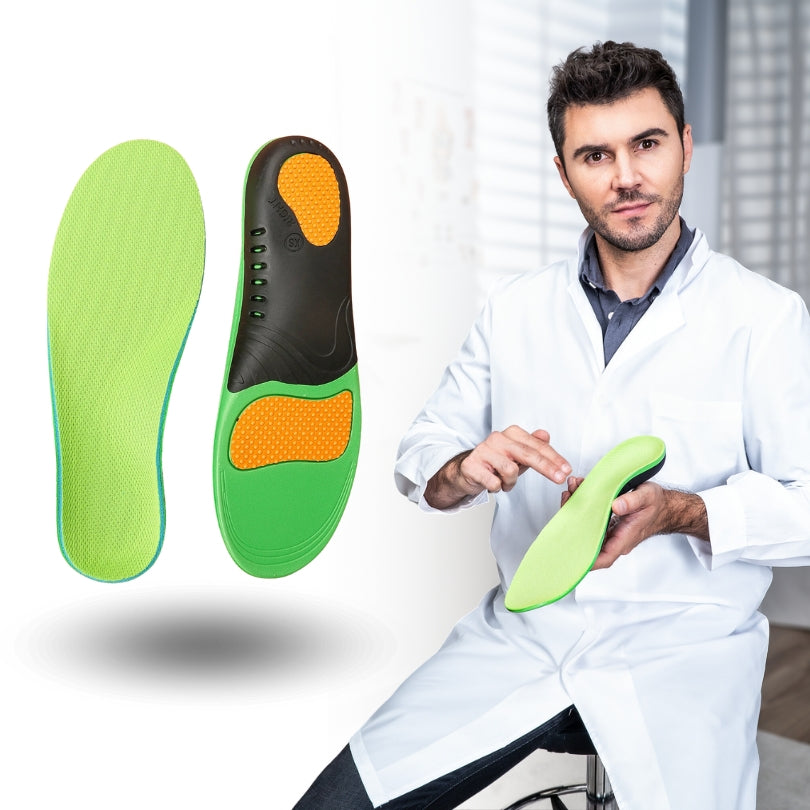
Orthotic arch support insoles are designed for individuals experiencing foot misalignment, chronic discomfort, or excessive pressure during daily activities. They are widely recommended in both clinical and preventive contexts to improve foot function and reduce pain.
One of the most common groups benefiting from orthotic arch support insoles includes individuals with flat feet (fallen arches). In this case, the arch collapses inward, leading to overpronation and strain on the lower limbs.
Other key user profiles include:
- People with plantar fasciitis or chronic heel pain
- Individuals with high arches experiencing poor shock absorption
- Workers who stand for long hours (nurses, retail, factory workers)
- Athletes exposed to repetitive impact and high training loads
- Users with knee, hip, or lower back pain linked to poor foot alignment
Orthotic arch support insoles are also beneficial for individuals recovering from overuse injuries, as they help redistribute pressure and reduce stress on soft tissues during healing. In preventive care, they are often used to maintain proper posture and reduce the risk of developing musculoskeletal imbalances over time.
From a clinical standpoint, podiatrists often recommend orthotic arch support insoles as a first-line intervention before considering more invasive treatments such as custom orthotics.
Check out this guide: Do Bunion Splints Work? What the Evidence Really Says
How to Choose the Best Orthotic Insoles?
Selecting the right orthotic arch support insoles requires understanding your foot type, daily activity level, and the severity of your discomfort. Not all insoles provide the same level of support, and choosing the wrong type can reduce effectiveness or even increase pain.
The first factor to consider is arch type:
- Low arches (flat feet) require firm medial support to prevent overpronation
- Neutral arches need balanced support and cushioning
- High arches require enhanced shock absorption and pressure distribution
Material is another key element. Rigid materials like carbon fiber provide strong structural correction, while softer foams or gels prioritize comfort and impact reduction.
When choosing orthotic arch support insoles, also consider:
- Level of support (light, moderate, or firm correction)
- Shoe compatibility and thickness of the insole
- Intended use (daily wear, sports, or medical recovery)
- Durability and long-term performance
For individuals with chronic pain or specific conditions, consulting a podiatrist can help ensure the chosen orthotic arch support insoles match biomechanical needs accurately.
Finally, proper fit is essential. Even the best-designed insole will be ineffective if it does not align correctly with the shoe and foot structure.
How to Choose the Best Orthotic Insoles?
Although often confused, there is a clear difference between orthotic arch support insoles and regular arch support inserts. Understanding this distinction helps users choose the right level of support for their needs.
Regular arch supports are mainly designed for comfort. They provide soft cushioning under the arch and help reduce fatigue during daily walking or standing. However, they do not actively correct foot alignment or biomechanics.
In contrast, orthotic arch support insoles are designed for structural correction. They support proper foot alignment, control overpronation, and redistribute pressure more efficiently across the entire foot.
Key Differences
|
Feature |
Regular Arch Supports |
Orthotic Arch Support Insoles |
|
Main purpose |
Comfort |
Biomechanical correction |
|
Support level |
Soft / cushioning |
Firm / structured |
|
Foot alignment |
Minimal impact |
Significant improvement |
|
Pain relief |
Short-term relief |
Long-term support |
|
Recommended use |
Mild fatigue |
Chronic pain or conditions |
While regular supports may help with minor discomfort, orthotic arch support insoles are typically recommended for persistent pain, structural imbalances, or medical foot conditions. They act more like a therapeutic tool than a simple comfort accessory.
Common Mistakes to Avoid
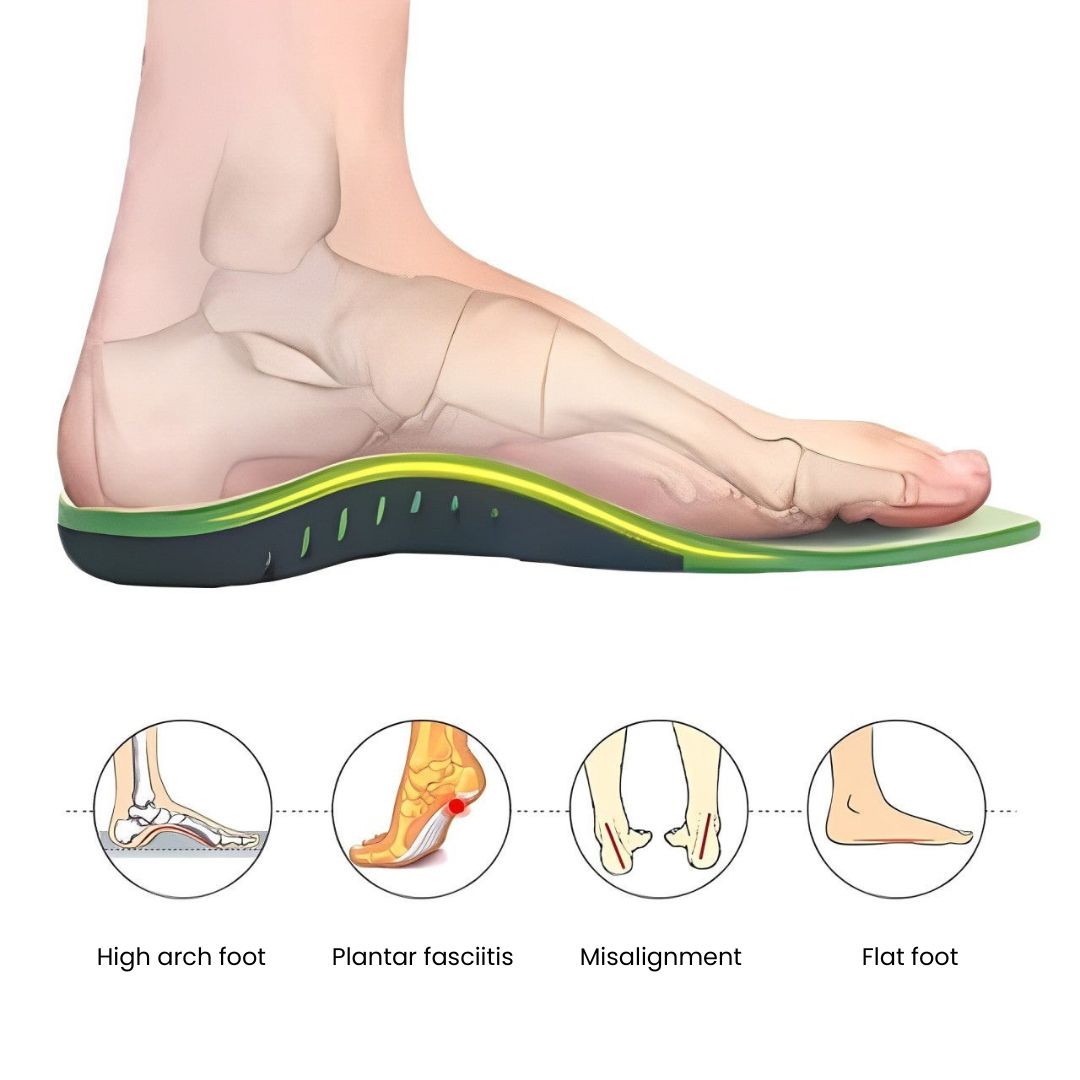
Even high-quality orthotic arch support insoles can be ineffective if used incorrectly. Many users make simple mistakes that reduce comfort and limit long-term benefits. One of the most common errors is choosing the wrong arch type. Using overly rigid support for low pain levels, or insufficient support for flat feet, can worsen discomfort instead of improving it.
Another frequent mistake is skipping the adaptation period. Feet and muscles need time to adjust to orthotic arch support insoles, especially if they provide strong biomechanical correction. Wearing them for long hours immediately can cause temporary soreness.
Other mistakes include:
- Using worn-out or old insoles beyond their lifespan
- Ignoring shoe compatibility and proper fit
- Expecting immediate results without gradual adaptation
- Using the same pair for all activities (work, sport, daily wear)
It is also important not to assume that all orthotic arch support insoles offer the same level of correction. Quality, material, and design vary significantly between models. Proper selection, gradual use, and correct fitting are essential to achieving the full therapeutic benefits.
Expert Tips for Better Results
To maximize the benefits of orthotic arch support insoles, proper usage and consistency are essential. Many users expect immediate relief, but optimal results often develop gradually as the feet adapt to improved alignment.
One key expert recommendation is to introduce orthotic arch support insoles progressively. Start by wearing them for a few hours per day before transitioning to full-day use. This allows the muscles and ligaments to adjust naturally.
Additional expert tips include:
- Always ensure a proper fit inside the shoe to avoid sliding or pressure points
- Replace insoles regularly, especially if they show signs of compression or wear
- Use activity-specific pairs when possible (work, sport, daily use)
- Pair insoles with supportive footwear for better biomechanical efficiency
For individuals with chronic pain, combining orthotic arch support insoles with stretching exercises for the plantar fascia and calf muscles can further improve outcomes.
Finally, consistency is key. Sporadic use will not provide the same structural benefits as daily wear, especially in cases of postural imbalance or overpronation.
Expert Summary and Key Takeaway
Choosing the right support can make a significant difference in daily comfort, posture, and long-term foot health. As highlighted throughout this guide, orthotic arch support insoles are not just simple cushioning inserts but biomechanical tools designed to improve alignment, reduce pressure, and support the entire kinetic chain.
Whether you suffer from plantar fasciitis, flat feet, or general foot fatigue, selecting properly designed orthotic arch support insoles can help reduce pain and improve mobility over time. The key is to match the insole type to your specific foot structure and usage needs, while ensuring gradual adaptation and proper fit.
In the long run, consistent use of well-designed orthotic arch support insoles can contribute to better posture, reduced strain on joints, and improved overall comfort in daily activities.