

Orthotic Insoles for Overpronation: Best Support for Alignment
Overpronation is one of the most common biomechanical foot issues, affecting an estimated 60–70% of adults to varying degrees, according to podiatric research. This condition occurs when the foot rolls excessively inward during walking or running, leading to poor alignment and increased stress on the ankles, knees, and lower back.
If left uncorrected, overpronation can contribute to chronic pain, reduced athletic performance, and long-term joint problems. This is where orthotic insoles for overpronation play a critical role. Unlike standard cushioning insoles, these are specifically engineered to stabilize the foot, support the arch, and control motion at every step.
In this expert guide, you’ll learn how overpronation affects your body, how orthotic insoles actually correct it, and how to choose the most effective option based on your needs.
What Is Overpronation and Why It Needs Correction?

Overpronation refers to an excessive inward rolling of the foot during the walking or running cycle. While a small degree of pronation is natural and necessary for shock absorption, overpronation occurs when this movement becomes too pronounced, disrupting the body’s alignment from the ground up.
In most cases, overpronation is linked to structural factors such as flat feet (fallen arches), weak foot muscles, or genetic predisposition. However, it can also develop over time due to poor footwear choices or repetitive high-impact activities.
The real concern is not just the foot itself, but the chain reaction it creates. When the arch collapses inward, the ankle rotates, the tibia shifts, and this misalignment can travel upward to the knees, hips, and lower back. Over time, this can lead to chronic pain conditions such as plantar fasciitis, knee strain, or lower back discomfort.
This is why orthotic insoles for overpronation are widely recommended by podiatry experts. They are designed to restore a more neutral foot position, reduce excessive inward rolling, and improve overall body alignment during movement. Without correction, overpronation can continue to worsen, especially in active individuals or those standing for long periods.
Addressing the issue early helps prevent long-term musculoskeletal complications and improves both comfort and mobility in daily life.
Check out this guide too: Do Bunion Splints Work? What the Evidence Really Says
How Orthotic Insoles Fix Overpronation: Biomechanical Explanation
Orthotic insoles work by correcting the underlying biomechanical imbalance that causes overpronation, rather than simply cushioning its effects. Their design focuses on controlling foot motion, redistributing pressure, and improving alignment throughout the entire lower limb chain.
Firm Arch Support: Preventing Arch Collapse
The primary function of orthotic insoles is to support the medial arch of the foot. In cases of overpronation, the arch tends to collapse inward under body weight. A structured arch support helps maintain a neutral foot position, reducing excessive inward rolling and improving stability with each step.
Medial Posting: Controlling Excessive Inward Motion
Many high-quality orthotic insoles include a reinforced medial post. This component acts as a mechanical barrier that limits inward foot rotation. By guiding the foot into a more neutral alignment, it helps reduce stress on the ankle and knee joints, which are commonly affected by overpronation.
Deep Heel Cup: Stabilizing the Foundation
A deep heel cup plays a crucial role in locking the heel into the correct position. This prevents side-to-side movement of the calcaneus (heel bone), which is a key contributor to instability. By stabilizing the heel, the entire kinetic chain above the foot becomes better aligned.
Together, these structural elements make orthotic insoles for overpronation effective not just for comfort, but for long-term correction of gait mechanics. Unlike standard gel or foam inserts, they actively guide foot motion and improve posture during walking, running, or standing.
Key Features to Look for in Orthotic Insoles for Overpronation
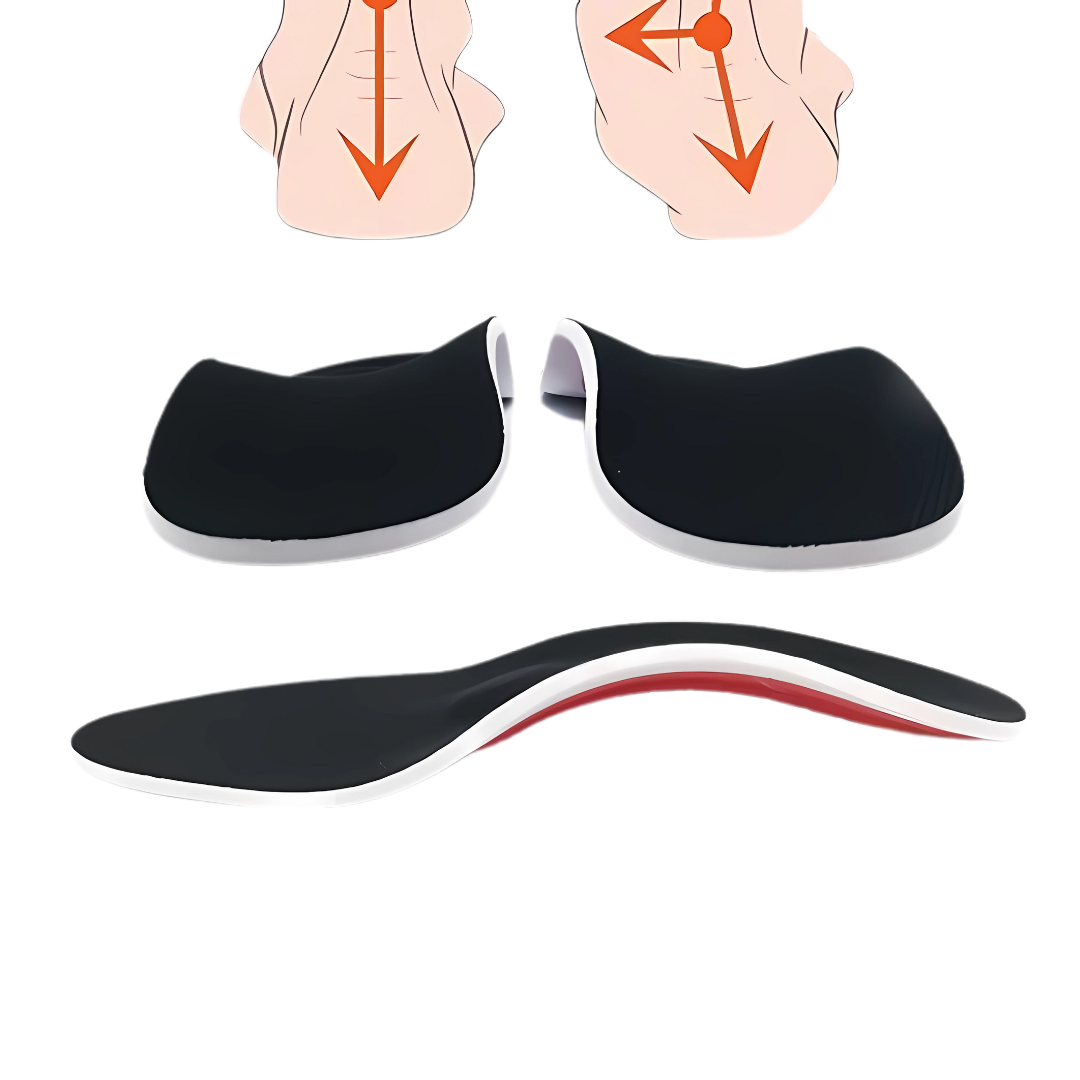
Choosing the right orthotic insoles requires more than selecting a comfortable cushion. Effective correction depends on specific structural and material features that directly influence foot alignment and motion control.
Firm vs Soft Structure. One of the most important factors is rigidity. Soft foam insoles may provide temporary comfort, but they fail to control excessive foot motion. For overpronation, a firmer structure is essential because it supports the arch and prevents collapse under body weight during movement.
Arch Height Compatibility. Not all feet require the same level of arch support. Mild overpronation typically benefits from moderate support, while more severe cases require higher and more structured arch reinforcement. A mismatch between arch height and foot type can reduce effectiveness and even create discomfort.
Motion Control Design. High-quality orthotic insoles for overpronation include motion control features such as reinforced medial support and structured heel positioning. These elements help guide the foot into a neutral gait pattern, reducing inward rolling with each step.
Durable Support Materials. Material composition plays a major role in long-term performance. EVA, polyurethane, and carbon-reinforced layers are commonly used for their balance of durability and structural stability. These materials ensure that the insole maintains its corrective function over time, even under daily use.
Heel Stabilization System. A deep heel cup or structured heel cradle is essential to stabilize the rear foot. This prevents excessive lateral movement and helps maintain proper alignment of the entire lower limb.
Together, these features define the effectiveness of orthotic insoles for overpronation, ensuring they go beyond comfort to deliver real biomechanical correction.
Best Types of Orthotic Insoles for Overpronation
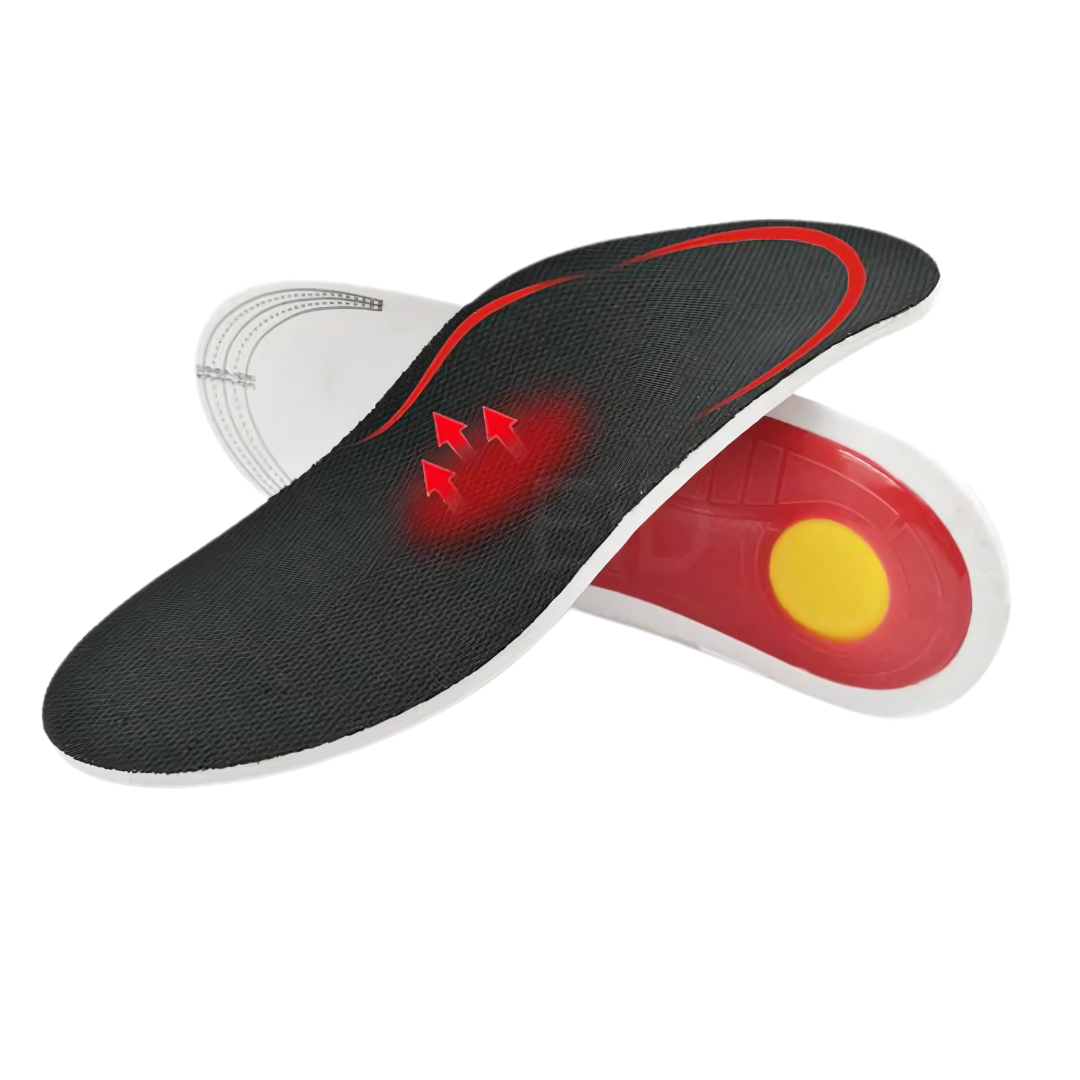
Selecting the right support depends on the severity of overpronation, daily activity level, and pain distribution. Below are the most effective categories of insoles designed to improve alignment and reduce excessive inward foot rolling.
1. Flat Foot Arch Support Insole
This type is specifically designed for individuals with flat feet and moderate to severe overpronation. It provides a structured arch that helps lift and stabilize the midfoot, reducing collapse during walking or standing. It is ideal for daily use and long periods of weight-bearing activity.
2. ConfortPlus™ Orthopedic Insoles
Designed for all-day comfort with corrective support, these insoles balance cushioning and structural alignment. They are suitable for users who experience mild to moderate overpronation and need a comfortable transition into orthotic support without excessive rigidity.
3. Elite Performance Carbon Insoles
Built for active individuals and athletes, these insoles use a carbon-reinforced structure to enhance stability while maintaining responsiveness. They are ideal for high-impact activities where controlling foot motion is essential to prevent injury and fatigue.
4. Gel Comfort Absolute Insole
This option focuses on shock absorption combined with basic alignment support. It is suitable for beginners or users who primarily need relief from discomfort while gradually addressing overpronation mechanics.
5. Orthopedic Insoles for Plantar Pain
For users experiencing both overpronation and heel or plantar fascia pain, this type offers targeted heel cushioning combined with structured arch support. It helps reduce strain on the plantar fascia while improving foot alignment.
Each of these solutions addresses different needs, but all share a common goal: improving stability through properly designed orthotic insoles for overpronation that correct gait mechanics rather than simply cushioning the foot.

How to Choose the Right Insoles for Your Severity Level?
The effectiveness of orthotic support largely depends on matching the insole design to the severity of overpronation. Using the wrong level of support can reduce results or even create additional discomfort.
- For mild overpronation, a semi-rigid insole with moderate arch support is usually sufficient. The goal here is to gently guide the foot into a better alignment without overcorrecting natural movement. These users often benefit from flexible yet structured designs that can be used in everyday shoes.
- For moderate overpronation, a more structured orthotic with firm arch support and a defined heel cup is recommended. At this stage, the foot shows more noticeable inward rolling, which requires stronger motion control to stabilize the gait and reduce joint stress.
- For severe overpronation, rigid or high-support orthotics are necessary. These insoles are designed with reinforced materials that limit excessive foot collapse and provide maximum alignment correction. They are often used by individuals with flat feet or chronic pain conditions linked to poor biomechanics.
In all cases, the best orthotic insoles for overpronation are those that match both the structural needs of the foot and the user’s daily activity level, whether for walking, standing, or sports performance. Proper selection ensures better comfort, improved posture, and reduced risk of long-term musculoskeletal issues.
Check out this guide too: Bunion Pain: Causes, Symptoms & Fast Relief Solutions That Work
Final Recommendation
Overpronation is not just a minor foot imbalance; it is a biomechanical issue that can progressively affect the entire body if left unaddressed. From the ankles to the lower back, improper foot alignment can lead to chronic discomfort and reduced mobility over time.
Using properly designed orthotic support is one of the most effective non-invasive solutions available today. However, not all products deliver the same level of correction. The most effective orthotic insoles for overpronation combine firm arch support, heel stabilization, and motion control technology to guide the foot back into a neutral position.
The key is to choose insoles based on your severity level and daily activity demands. Whether for walking, standing long hours, or sports performance, a well-matched orthotic can significantly improve comfort, posture, and long-term joint health.
When used consistently, high-quality orthotic insoles do more than relieve pain—they actively contribute to better movement mechanics and overall body alignment.