

Toe Separator and Bunion Spacer: What's the Difference and Which One You Need?
That bump at the base of your big toe. The constant friction between your toes. The way certain shoes have become unwearable. If any of that sounds familiar, you've probably already come across the terms toe separator and bunion spacer. They look similar. They're often sold side by side. And the marketing on most products blurs the lines between them completely.
Here's a clear breakdown of what each one actually does — and how to choose the right option for your situation.
First, Let's Talk About What's Happening in Your Foot

A bunion (medically called hallux valgus) forms when the big toe gradually drifts toward the second toe, pushing the joint in the opposite direction and creating a bony bump on the inside of the foot.
It's a slow, progressive process. Tight shoes — especially narrow or pointed ones — are often the trigger, though genetics and foot structure play a significant role too. Once the angle of the big toe starts to shift, the surrounding soft tissue adapts to that misalignment, which is why bunions tend to worsen over time without intervention.
The pain comes from a few different sources: pressure on the joint from shoes rubbing against the bump, friction between toes that are starting to crowd or overlap, and general discomfort from a foot that's no longer moving the way it should.
This is where toe separators and bunion spacers come in. They're not the same thing — and understanding the difference matters.
Want to go further? Read our guides on How to Treat Bunionette: Causes, Symptoms & Best Treatment Options
What Is a Toe Separator?

A toe separator (also called a toe spacer) is a device placed between the toes to gently push them apart and restore natural spacing. Most are made from soft silicone or gel, and they can be worn between a single pair of toes — typically the big toe and the second — or across all five toes at once for a full-foot stretch.
They work in several ways:
- Reducing friction and pressure between toes that are rubbing together, which prevents blisters, corns, and calluses from developing
- Stretching the adductor hallucis muscle — the muscle that pulls the big toe inward — gently counteracting the drift that causes bunions to progress
- Promoting natural toe splay, the way toes are meant to spread during weight-bearing movement
- Improving balance and stability, since properly aligned toes create a wider, more even base of support
Toe separators can be worn during the day (including inside shoes with a wide enough toe box), during exercise, or barefoot at home. Many people start with 30–60 minutes a day and increase gradually as the foot adapts.
What Is a Bunion Spacer?
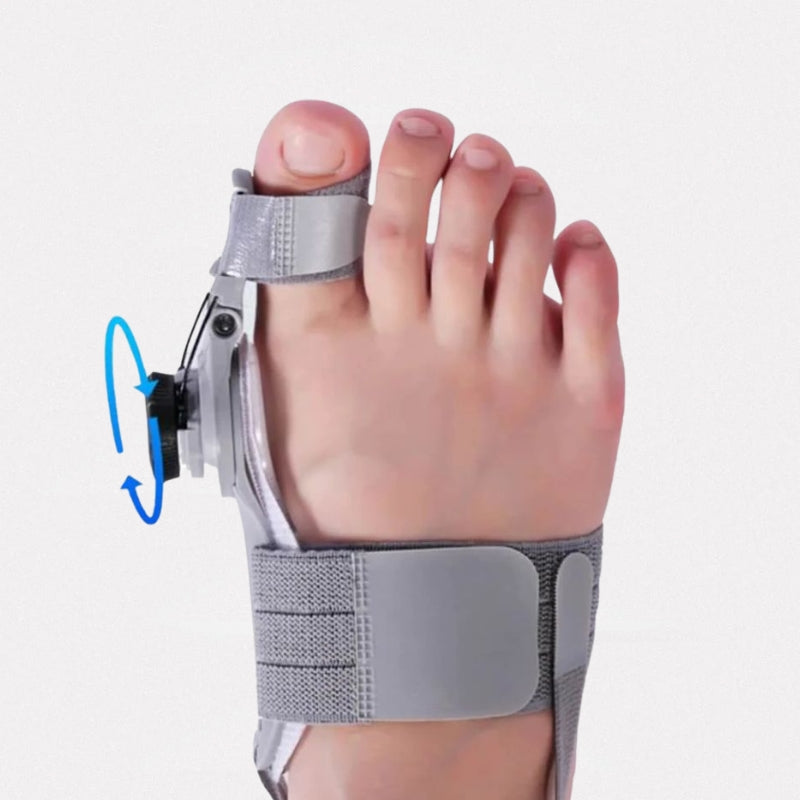
A bunion spacer is a type of toe separator, but with a more targeted purpose: it's designed specifically to reduce the pressure and friction on the bunion joint itself.
Where a general toe separator focuses on creating space between toes, a bunion spacer sits between the big toe and the second toe to gently nudge the big toe back toward its natural position — and cushion the joint in the process.
Many bunion spacers are made from medical-grade silicone infused with softening agents to help soothe the skin around the bunion. They're typically slim enough to wear inside a shoe, making them a practical all-day option for people who can't avoid being on their feet.
The distinction, in short: a toe separator addresses the toes; a bunion spacer addresses the joint. Both create space. But a bunion spacer is more anatomically targeted.
Do They Actually Work?
This is the honest answer: it depends on what you're expecting. Toe separators and bunion spacers won't eliminate a bunion. Once the bony prominence has formed, no non-surgical device can physically remove it. Anyone claiming otherwise is misleading you.
What they can do — and the research supports this — is meaningful:
- Reduce pain by relieving pressure on the joint and friction between toes
- Slow the progression of early-to-moderate bunions by counteracting the inward drift of the big toe
- Improve toe alignment and foot mechanics over consistent, long-term use
- Prevent secondary issues — corns, calluses, blisters, and overlapping toes — that develop when toes are chronically crowded
One study published in the Journal of Foot and Ankle Research found that using toe spacers over six months led to a measurable reduction in bunion angle in participants with mild to moderate bunions. Another found that spacers improved subjective pain scores even in participants with more advanced cases.
The key word throughout is consistent. A toe separator used occasionally won't change much. Used daily, as part of a broader approach to foot health, it genuinely makes a difference.
Read our guides on Tailor's Bunion: What It Is, Why It Hurts, and How to Get Your Life Back
Choosing the Right Product for Your Situation

Not every bunion or foot alignment issue looks the same. Here's how to think about what you actually need.
If you have an early-stage bunion or want to prevent one
A silicone toe separator worn daily — especially during rest or light activity — is your best starting point. It's low-commitment, low-cost, and effective for maintaining toe spacing before the joint angle becomes significant.
Semello's Silicone Toe Spacers are built exactly for this: soft, durable, and designed for regular wear without irritation.
If your bunion is already causing daily discomfort
You need something more structured. A bunion corrector that holds the big toe in a corrected position — either during activity or overnight — provides the sustained realignment that passive spacers alone can't achieve.
The Bunion Corrector – Adjustable Toe Straightener from Semello offers adjustable support so you can find the level of correction that feels right without forcing the toe into an uncomfortable position.
If you want something you can wear all day, including in shoes
Look for a slim-profile option. The Slim Bunion Splint – Lightweight Toe Brace is designed for exactly this — discreet enough to wear under regular footwear, supportive enough to maintain alignment throughout the day.
If you prefer something textile-based
Bunion relief socks with built-in toe alignment are a gentler alternative for those who find silicone spacers uncomfortable. Semello's bunion Relief Socks – Toe Alignment Sleeves are a good entry point, particularly for home use or sleep.
For nighttime correction
The Night Bunion Splint – Overnight Toe Support Brace is designed for use during sleep, holding the toe in a corrected position for extended periods without the constraints of shoes. This is when the foot is fully at rest and most receptive to gradual realignment.
For pinky toe bunions (tailor's bunion)
Often overlooked, tailor's bunions form on the outer edge of the foot and require a different fit entirely. The Pinky Toe Gel Sleeve – Tailor's Bunion Protector targets this specifically.
Explore the full Semello bunion corrector range:

When to Start — and Why Earlier Is Always Better
The earlier you address a bunion, the more options you have.
In the early stages, a toe separator and bunion spacer used consistently can genuinely slow progression and keep pain manageable for years. In later stages, the bony structure has often shifted enough that conservative tools provide relief but can't reverse the deformity.
The same applies to prevention. If you have a family history of bunions, spend long hours in narrow footwear, or already notice the first signs of a toe starting to drift — starting with a toe separator now costs very little and could save you significant discomfort down the line.
Most people wait until the pain becomes hard to ignore. By that point, recovery is longer and harder.
How to Get the Most Out of a Toe Separator or Bunion Spacer?
A few practical points that make a real difference:
Start gradually. The stretch and pressure of a spacer can feel intense at first. Begin with 30–60 minutes a day and increase over one to two weeks as your foot adjusts.
Pair with footwear that doesn't undo the work. Narrow, pointed, or tight shoes counteract everything a spacer does. Wide toe box shoes — or at least shoes that don't compress the front of the foot — are non-negotiable if you want results.
Combine with foot exercises. Toe curls, toe spreads, and calf stretches all support the alignment work a spacer begins. The spacer creates space; exercises help the muscles learn to maintain it.
Be consistent. This isn't a one-week fix. Toe alignment work is measured in months, not days.
The Bottom Line
A toe separator creates space between your toes, reduces friction, and encourages natural alignment. A bunion spacer does the same with a specific focus on the big toe joint and the bony prominence associated with hallux valgus.
Used correctly and consistently, both tools can meaningfully reduce pain, slow progression, and improve the way your foot functions every day. They won't erase a bunion — but they can make living with one significantly more manageable, and help prevent a mild case from becoming a serious one.
Where you start depends on where you are. Semello's range covers every stage — from silicone spacers for everyday prevention to adjustable correctors and night splints for active management.