

Tailor's Bunion: What It Is, Why It Hurts, and How to Get Your Life Back
That little bump on the outside of your foot? The one that turns every shoe into a source of misery? It has a name — and it's more common than you think. A tailor's bunion (also called a bunionette) forms at the base of your little toe when the fifth metatarsal bone shifts outward. The bump itself isn't dangerous. But left untreated, it gets worse. And the longer you ignore it, the shorter your list of comfortable shoes becomes.
Here's everything you actually need to know — causes, symptoms, treatments, and how to choose footwear that stops making things worse.
Why It's Called a Tailor's Bunion?
Centuries ago, tailors sat cross-legged for hours on end, pressing the outer edge of their feet against the ground. That constant friction caused a painful bump to develop at the base of the little toe. The name stuck. Today, you don't need to be a tailor to develop one. You just need the wrong shoes, the wrong foot shape, or — frustratingly — the wrong parents.
What Exactly Is a Tailor's Bunion?

Your fifth metatarsal is the long bone that connects your little toe to the middle of your foot. A tailor's bunion forms at its head — the knobby end near the toe joint. Either the bone drifts outward, the toe drifts inward, or both happen at once.
The result is a bony protrusion that sits right where most shoes press hardest. Every step in a narrow shoe becomes a small act of friction. Over time, the skin reddens, swells, and sometimes blisters. In more severe cases, the toe alignment shifts enough to affect your gait.
It's structurally different from a standard bunion, which appears on the inside of the foot at the big toe. The mechanics are similar, but the location matters — because the outer edge of the foot is where shoe designers tend to show the least mercy.
Looking for more on foot health? See also: Best Morton’s Neuroma Orthotic Insoles: Top 7 Expert Picks & Guide
How Common Is It — And Who Gets One?
Tailor's bunions are less common than regular bunions. Research presented at the American College of Rheumatology found that while 39% of people with foot disorders had a standard bunion, only 4% had a tailor's bunion. Less common doesn't mean rare — bunions in general affect 10–25% of adults, so the absolute numbers are still significant. A few groups are more vulnerable:
- Women are disproportionately affected. Narrow, pointed, and high-heeled shoes compress the forefoot and push the little toe inward. Hormonal changes during pregnancy also loosen ligaments, making foot deformities more likely to develop or worsen.
- People with a family history of foot problems. Over 70% of people with bunionettes have a family history of foot deformities, according to published podiatric research. If your parent had them, your foot structure probably did you no favors either.
- Anyone who stands for long hours — teachers, nurses, retail workers — puts sustained mechanical stress on the foot that accelerates structural changes.
- Runners and athletes face elevated risk from repetitive high-impact loading, especially in shoes with inadequate toe box width.
The condition also tends to worsen with age. Many people develop the structural shift in their twenties or thirties and don't feel real pain until their forties.
Recognizing the Symptoms

The bump is obvious. What's less obvious is how many other symptoms can follow from it:
- Pain and tenderness on the outer edge of the foot, especially in shoes
- Redness and swelling around the fifth metatarsal head
- Corns or calluses forming on or near the bump as the skin thickens in response to friction
- Bursitis — a fluid-filled sac can develop over the bump and become inflamed
- Toe misalignment in more advanced cases, where the little toe is visibly pushed inward
Not everyone feels pain right away. Some people live with a noticeable bump for years before it becomes a problem. But the structural shift is permanent — the bump doesn't shrink on its own, and slow progression is the rule, not the exception.
Worth noting: if the bump appeared suddenly after an injury, or feels hot and is accompanied by joint pain throughout the body, see a doctor. Those patterns can indicate different conditions entirely.
What Causes a Tailor's Bunion?
Three main drivers, often overlapping:
1. Inherited foot mechanics. A wide forefoot, flat feet, high arches, or a fifth metatarsal that's proportionally longer than your fourth — these structural traits shift weight distribution toward the outer edge. You can't change the bone you were born with, but you can manage the load on it.
2. Footwear. Narrow toe boxes are the most consistent aggravating factor across every clinical study on bunionettes. Pointed shoes, stilettos, and any shoe that compresses the forefoot all accelerate what genetics started. This doesn't mean shoes cause the underlying deformity — but they absolutely determine how fast it progresses and how much it hurts.
3. Repetitive mechanical stress. Long hours on your feet, high-impact sport, or positions that put sustained pressure on the outer foot edge all contribute. Tailors sat cross-legged. You might stand on concrete for eight hours a day. The physics are the same.
Looking for more on foot health? See also: Best Supination Orthotic Insoles: Expert Guide & Top 7 Picks
Non-Surgical Treatments That Actually Work
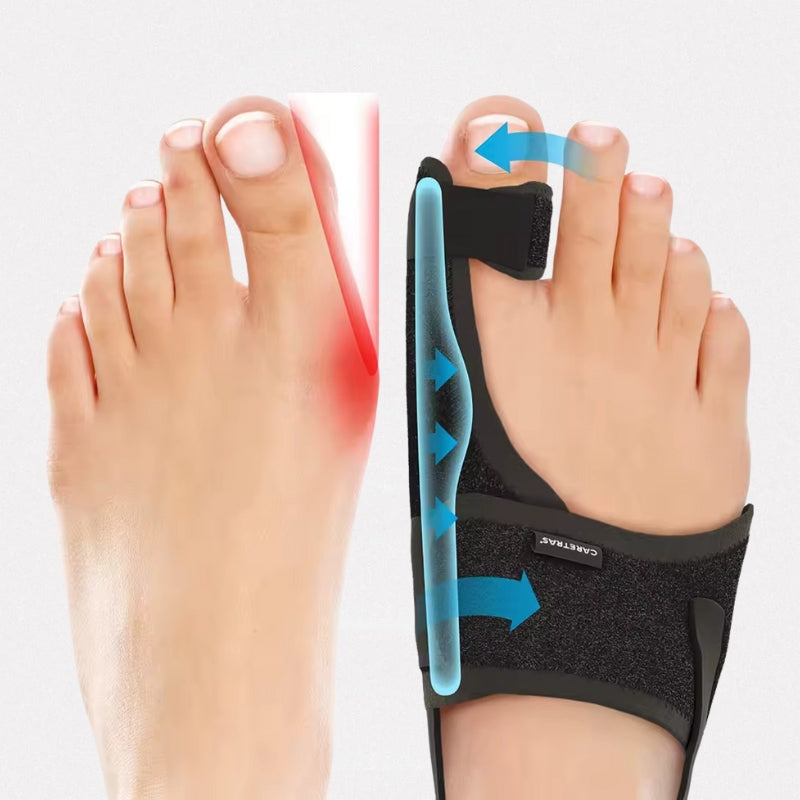
Here's where most articles get it wrong — they mention "conservative treatment" in one paragraph and then spend the rest talking about surgery. Surgery is an option, but it's a last resort. Most people manage tailor's bunion pain effectively without ever going near an operating room.
Footwear: the most important change you can make
This is step one. Nothing else works properly if your shoes keep pressing on the bump.
What to look for:
- Wide toe box: enough room for your little toe to sit without pressure from the side
- Soft or stretchy uppers: mesh, knit, or soft leather that yields to the foot's shape
- Low heel — under 2 inches, ideally flat. Higher heels push the forefoot forward into the shoe's narrowest point
- Adjustable closures: laces or straps let you customize fit as swelling changes through the day
- Rounded or square toe: pointed toes are essentially designed to compress bunionettes
A quick test podiatrists recommend: remove the insole from a candidate shoe and stand on it barefoot. If the front of your foot spreads beyond the insole's edge, the toe box is too narrow.
Semello's orthopedic shoe collection is worth exploring here — designed specifically around foot conditions that standard footwear ignores.

Orthotic insoles: pressure redistribution, not just cushioning
Orthotics get lumped with "cushioning" in most guides, and that undersells what they actually do. A well-designed insole changes how load is distributed across the entire foot — reducing the concentration of force on the fifth metatarsal head.
Specifically, insoles help by:
- Supporting the arch to correct overpronation, which is a common contributor to outward metatarsal drift
- Offloading the outer edge by adjusting how weight travels through each step
- Providing a stable platform that reduces the micro-movements that cause friction inside the shoe
The difference between a foam drugstore pad and a proper orthotic is the difference between a bandage and a cast. One absorbs a little shock. The other restructures how your foot interacts with the ground.
Semello's orthotic insoles are designed for structural support — not just softness. If you're spending most of your day on your feet, that distinction matters more than it sounds.

Padding and bunion shields
Silicone gel pads placed directly over the bump reduce friction between the protrusion and the shoe. They don't correct anything structurally, but they can make the difference between a painful day and a bearable one. Best used as a complement to better footwear, not a substitute.

Ice therapy
10–20 minutes of ice on the affected area, two to three times a day, reduces inflammation after activity. Use a cloth between the ice and skin to avoid frostbite on sensitive tissue.
Calf stretching
Tight calf muscles affect how the foot strikes the ground, increasing forefoot loading. A daily calf stretch — heel on the ground, lean into a wall for 30–60 seconds — reduces that downstream pressure. Simple, free, and underutilized.
Anti-inflammatory medication
Over-the-counter NSAIDs like ibuprofen manage acute flare-ups. Not a long-term solution, but useful when inflammation peaks.
When to See a Doctor
Conservative measures work for most people. But there are situations where professional assessment is worth it:
- Pain is worsening despite footwear changes and orthotics
- You're changing the way you walk to avoid putting pressure on the area
- Bursitis or skin breakdown is occurring
- The toe is visibly drifting in a way that's affecting other toes
A podiatrist can assess the severity with X-rays, prescribe custom orthotics calibrated to your specific foot structure, and discuss whether corticosteroid injections or surgical correction make sense for your situation.
Surgery — typically an osteotomy where the metatarsal bone is realigned and held in place with a small screw or plate — has a high success rate but a recovery window of 3 to 12 months. It's not a quick fix, which is exactly why consistent conservative management is worth the effort.
Preventing a Tailor's Bunion From Getting Worse
You can't reverse the structural change. But you can slow or stop its progression.
The single biggest lever: stop wearing shoes that press on the bump. This sounds obvious. It's also the thing most people don't do consistently, because aesthetics and habit are powerful. Beyond footwear:
- Check your insoles regularly. A worn insole provides no arch support, which increases forefoot loading over time.
- Stretch your feet and calves daily. Foot flexibility reduces compensatory pressure patterns.
- Manage your weight. Every pound of body weight multiplies into several pounds of force on the foot during walking. Less load means slower progression.
- Act early. The earlier you make adjustments, the more structural change you prevent. A small bump with mild symptoms is much easier to manage than a severe deformity.
Bunions: Get Back to Your Normal Life with These Experts' Tips
A tailor's bunion isn't a verdict. It's a condition that responds well to the right approach — and the right approach starts with what you put on your feet every day.
Most people don't need surgery. They need shoes with enough room in the toe box, insoles that actually support the arch, and the discipline to prioritize foot health before the pain becomes unavoidable.
If you're looking for a place to start, Semello's orthotic insole collection is designed for people dealing with exactly this kind of structural foot issue. Give your little toe the space it needs — and the support that keeps the rest of the foot honest.