

Insoles for Bunions: What Features Matter and Which Ones Are Just Noise
The insole market is loud. Every product promises "clinical support," "podiatrist-designed relief," and variations on phrases that don't mean much without context. If you have bunions, that noise gets in the way of a fairly simple question: what should an insole actually be doing for your foot?
Insoles can genuinely help — but only when they're addressing the right mechanics. The wrong pair, or the right pair in the wrong situation, changes nothing.
Why Insoles Matter for Bunions at All?

A bunion is a structural deformity. The first metatarsophalangeal joint shifts out of alignment, the big toe drifts inward, and the joint protrudes. No insole reverses that. Surgery is the only permanent fix. What insoles do address is the mechanical environment that either slows or speeds up how bad the bunion gets.
The main driver: overpronation. When your foot rolls inward with each step, it transfers excess load onto the inner edge of the foot and the big toe joint. That repeated pressure is what pushes the metatarsal bone outward over time and makes an existing bunion more painful. An insole that corrects pronation and distributes weight more evenly changes that load pattern. It doesn't eliminate the bunion — it changes what the joint is dealing with every time your foot hits the ground.
Because the root cause of bunions is improper biomechanics, most podiatrists and foot experts will recommend some type of insole to prevent or provide bunion support. That recommendation has a solid basis: a survey found that 75% of podiatrists recommend orthotic devices for the non-surgical treatment of adult hallux valgus.
The goal with insoles for bunions isn't correction — it's load management and pain reduction. In the early-to-moderate stages, when conservative care can still slow the trajectory, that's genuinely worth prioritizing.
Discover other insoles for foot problems: Best Insoles for Heel Pain | Expert Guide & Top Picks
Insoles for Bunions: What to Actually Look For?
Most insole marketing leads with cushioning. Cushioning is the least important thing on this list.
1. Arch support — the real one
Not a thin foam ridge that compresses within a week. Proper arch support means a semi-rigid or firm structure that holds its shape under body weight, matches the contour of your arch, and keeps the foot from collapsing inward. An insole with proper arch support and a deep heel cup can help control excessive pronation — the arch support keeps the foot from rolling inward, reducing stress on the big toe joint and alleviating pressure on existing bunions.
For flat feet, this is especially important. Without a natural arch, the foot has no structural resistance to pronation, so an insole doing that job from underneath matters.
2. Deep heel cup
The heel cup stabilizes where your foot anchors with each step. A shallow one lets the heel shift laterally, which sends compensatory movement up the chain to the forefoot — exactly where you don't want it. A deep heel cup locks the back of the foot in place and reduces that ripple effect.
3. Metatarsal pad
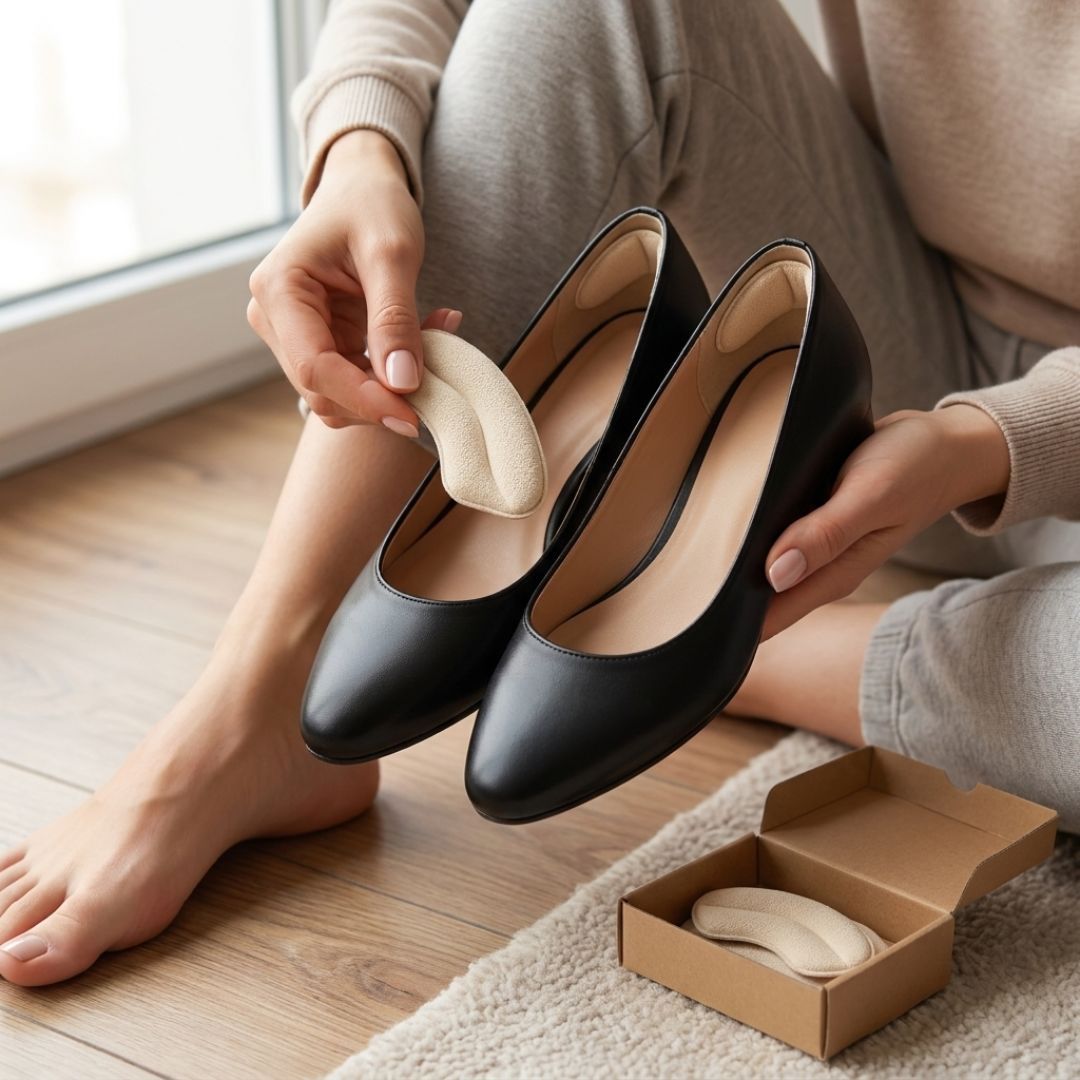
Bunions alter how the forefoot distributes pressure. The big toe joint takes more than its share, and the metatarsal heads behind it can become inflamed as a result — a condition called metatarsalgia that frequently accompanies bunions. Metatarsal pads help relieve pressure on the ball of the foot close to where the bunion forms. If your pain is across the ball of the foot rather than just at the joint, an insole with a metatarsal pad built in is worth prioritizing.
4. Firmness over cushioning
Bunion shoe inserts should give firm support with an arch height that matches your arch height — drugstore gel inserts and foam cushion inserts won't provide the support needed to relieve pain from bunions. Gel feels comfortable in the shop and compresses fast. A semi-rigid base with cushioned top layer gives you both structure and comfort without sacrificing one for the other.
5. Fit in your actual shoes
An insole that doesn't fit your shoe is useless. If your go-to shoes have a narrower profile, a bulky orthotic creates its own pressure problems. Thickness, width, and trim-to-fit options matter more than most product descriptions acknowledge.
Do you have biomechanical foot issues? See: Orthotic Insoles for Overpronation: Best Support for Alignment
The Semello Insole Range — Matched to Real Use Cases
Semello's orthotic insole line is built around specific foot conditions and contexts. For bunion-related pain, the most relevant options are:
- For general bunion pain with arch support needs: The Insoles for Plantar Fasciitis — Arch Support & Heel Cushion addresses overpronation and forefoot pressure directly — the two mechanical issues most closely linked to bunion pain. The arch structure is semi-rigid, which means it holds up through long periods of wear rather than compressing into a flat cushion by midday.
- For bunion pain concentrated in the heel and rearfoot: The Heel Spur Insoles — Arch Support & Heel Cushion pair a structured arch with targeted heel cushioning. People with bunions often develop secondary heel pain as they shift their gait to avoid loading the forefoot — this option manages both.
- For shock absorption and forefoot pressure: The Gel Heel Cups — Shock Absorbing Heel Pads are a lower-profile option for managing impact without the bulk of a full-length insole. Useful for shoes that won't accommodate a thicker insert but still need some cushioning work done.
- For runners and high-impact activity: The Carbon Fiber Insoles — Arch Support for Running provide rigid arch support and energy return — the right tool if you're running with bunions and need something that won't compress or degrade under sustained load.
- For blister and friction management at the heel: The Heel Grip Pads — Anti-Blister Shoe Cushions won't correct bunion mechanics, but they address a real secondary issue: when you shift your gait to protect the bunion, the heel often takes more friction than usual.
Browse the full Semello insole range here:

OTC Insoles vs. Custom Orthotics — Where the Line Is
Custom orthotics are cast or scanned from your actual foot and built to your specific mechanics. They're the most precise tool available, but they come with a price — typically $300–$600 or more, and they require a podiatry appointment.
While orthotics cannot remove an existing bunion bone, they are highly effective at stopping the progression of the deformity by correcting overpronation — removing the pressure pushing the big toe inward.
Over-the-counter insoles work on the same mechanical principles. The trade-off is precision: a well-made OTC insole addresses the right things — arch support, heel stability, forefoot pressure — but doesn't account for the exact angle of your arch or the specific degree of your pronation.
For most people in the mild-to-moderate bunion range, a quality OTC insole is a reasonable starting point. The research on custom vs. OTC for bunions specifically is limited — the evidence for effectiveness of orthotics for patients with hallux valgus is very limited overall, which is an honest caveat. But "limited evidence" in research terms means studies are few, not that the intervention doesn't work clinically. Podiatrist surveys consistently show high rates of recommendation, and the biomechanical logic is sound.
If OTC insoles don't move the needle on pain after consistent use over several weeks, that's the right time to have a podiatrist assess whether a custom device would do more.
What Insoles Won't Fix?
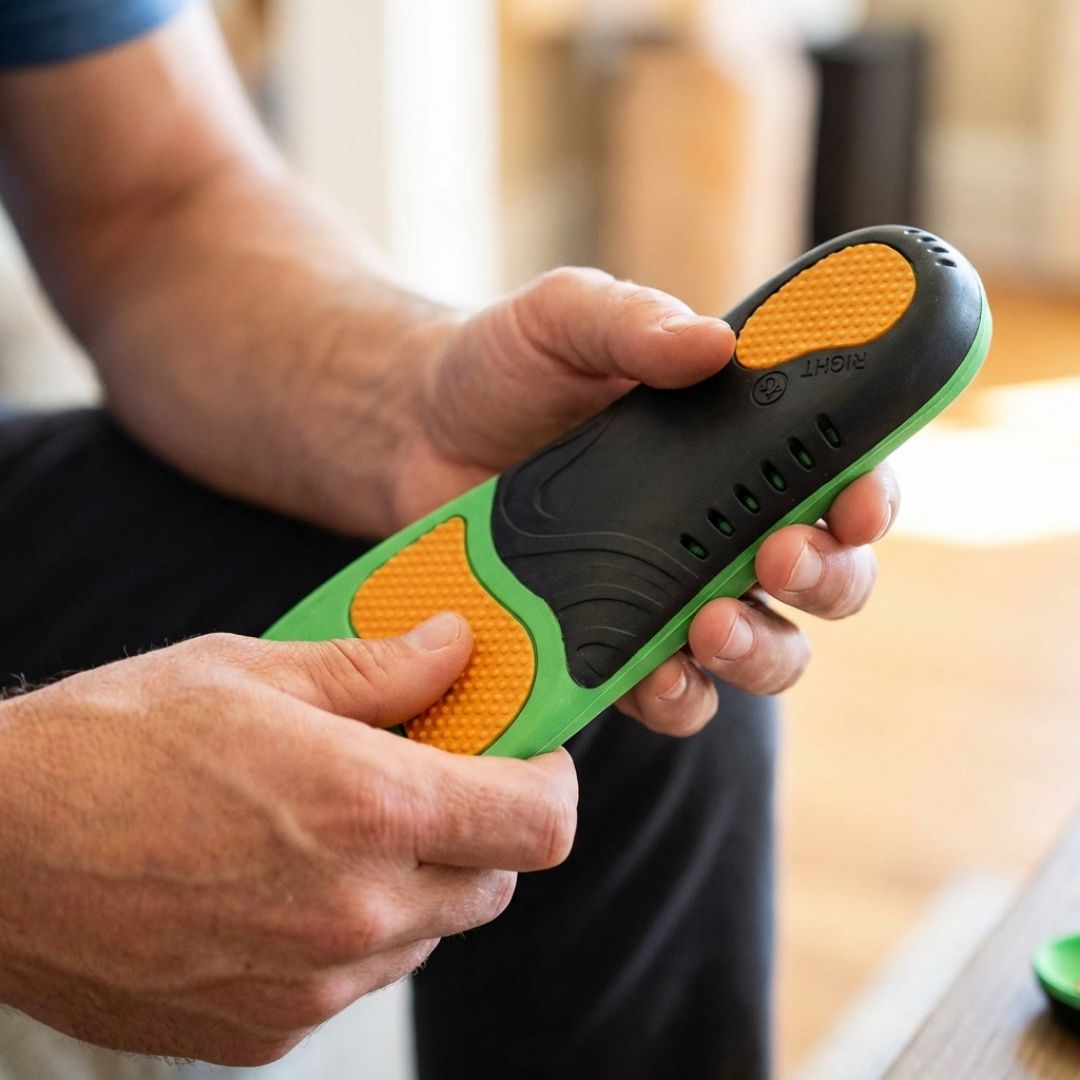
This is the part most insole marketing glosses over.
Insoles don't change the angle of the big toe joint. A 2022 study of 32 patients using three different orthotic types over 12 months found no significant reduction in hallux valgus angle in any group — despite participants reporting symptom improvement. That pattern shows up consistently in the research: pain gets better, alignment doesn't change measurably.
That's still a worthwhile outcome. Pain reduction changes how you move, how long you can stay on your feet, and whether you're unconsciously limping in a way that creates downstream problems in your knee and hip.
But if you're hoping insoles will reverse a visible bunion deformity, they won't. That expectation leads to disappointment and abandonment of a tool that was actually working for its intended purpose.
Pairing Insoles with Everything Else
Insoles work better in the right context. The biggest variable outside the insole itself is footwear.
An insole inside a shoe with a narrow toe box is still letting the shoe compress the bunion joint every step. Wide toe box shoes matter. Rigid dress shoes with a tight forefoot limit how much any insole can do. If the shoe is fighting the insole, the insole loses.
Insoles also complement — not replace — toe separators and correctors. An insole addresses the lower chain mechanics (pronation, heel stability, forefoot pressure). A toe separator or bunion corrector addresses the joint directly. Used together, they cover different parts of the problem simultaneously.
If you haven't looked at Semello's bunion corrector range alongside the insole options, that combination is worth considering — particularly for moderate bunions where the joint needs attention from both angles.

When to Stop Self-Managing
Insoles and supportive devices are appropriate when pain is manageable and the bunion is early-to-moderate. See a podiatrist when:
- Pain is constant, including when barefoot and at rest
- The big toe is overlapping or has no flexibility
- You've changed how you walk and it's affecting your knee, hip, or back
- The bump has grown noticeably over a few months
At that point, conservative management still has a role — but only with professional guidance on what's realistic for your specific deformity angle.
So What Should You Do?
Insoles for bunions work by changing the mechanical environment your foot operates in — not by correcting the deformity itself. Prioritize arch support, heel cup depth, and metatarsal padding over cushioning. Choose firm, structured insoles over soft gel, and make sure they fit the shoes you actually wear.
Consistent use matters more than perfection of choice. A well-made insole worn daily beats the ideal insole worn occasionally. Combine with a wider toe box where possible, and look at the Semello corrector range if you want to address the joint directly alongside the mechanics — both pieces together cover more ground than either one alone.
Find the right insole for your foot type: semello-shop.com/collections/insoles-inserts