

Insoles for Flat Shoes: The No-Nonsense Guide to Wearing Flats Without Pain
Flat shoes are supposed to be the comfortable option. And yet, by mid-afternoon, your heels ache, your arch is screaming, and you'd trade your favorite loafers for anything with a bit of padding. Sound familiar? You're not imagining it — and the fix is simpler than you think.
Why Flat Shoes Are Harder on Your Feet Than Heels?

Here's the thing no one tells you: a completely flat shoe is often worse for your feet than a small heel.
When there's zero elevation and zero arch support, your plantar fascia — the band of tissue running along the sole of your foot — absorbs every ounce of impact with no help. Your heel strikes the ground with full force. Your arch collapses slightly with each step. And over thousands of steps a day, that adds up fast.
The problem isn't just foot pain either. When your feet roll inward due to lack of support (a motion called overpronation), the misalignment travels straight up the kinetic chain — to your knees, hips, and lower back. That nagging back pain after a long day in your ballet flats? Your shoes might be the reason.
This is also why insoles for flat shoes aren't a luxury — they're basic biomechanical maintenance. We'll come back to exactly what to look for in a moment.
What Makes a Flat Shoe So Hard to Fit an Insole Into?
The challenge is real: most flat shoes have almost no interior volume to work with. A standard full-length insole will crowd your toes, shift your heel backward, or make the shoe feel two sizes smaller.
So most off-the-shelf insoles designed for trainers or work boots are immediately out. What you need is something built for the constraints of a low-profile shoe:
- Slim profile: thin enough to fit without lifting your foot out of the shoe
- ¾ length: stops before the toes so it doesn't push against the front of the shoe
- Adhesive or non-slip base: because flat shoes have no friction to hold an insole in place
- Targeted support: arch and heel, where the real damage happens
Get this wrong and the insole slides around, changes the fit of the shoe, or simply stops working by lunchtime. Get it right, and you can wear your favorite flats for a full day without a second thought.
Check out our article on Best Insoles for Flat Feet: Expert-Reviewed Guide to Find the Right Support
The 5 Things to Look For in Insoles for Flat Shoes

Are you looking for insoles for flat shoes? Here are the things you should check beforehand:
1. A Firm Arch Support (Not Just Foam)
Soft foam feels great in the store. It collapses within hours. What you actually need is a semi-rigid arch support that holds its shape under body weight. The goal isn't to fill the gap under your arch — it's to prevent your arch from collapsing with every step. A support that caves in doesn't do that.
Look for insoles with a structured shell or a reinforced arch bridge, even if they feel firm at first. They break in, and the firmness is exactly what makes them work long-term.
2. A Deep Heel Cup
The heel cup centers your heel bone and keeps the fat pad directly underneath it — where it's supposed to be, acting as your natural shock absorber.
Without a proper heel cup, your heel shifts slightly with each step, the fat pad migrates to the sides, and impact goes straight to the bone. That's the "stone bruise" feeling you get after a long day in unsupported flats. A deep, contoured heel cup is one of the most underrated features in any insole — and especially critical in flat shoe insoles, where the shoe itself provides no heel structure.
3. Slim Enough to Not Change the Fit
This is the constraint that eliminates most insoles from the conversation immediately. A good insole for flat shoes should be under 4–5mm at the heel, and almost nothing at the forefoot. If you can feel it pushing your foot up against the vamp of the shoe (the front upper), it's too thick.
The test: insert the insole, put the shoe on, and walk around. Your heel should still sit fully inside the shoe. Your toes should have the same room as without the insole.
4. Targeted Metatarsal Cushioning
The ball of the foot takes enormous pressure in flat shoes — especially if you spend time standing or walking on hard floors. A subtle metatarsal pad (a slight rise just behind the ball of the foot) redistributes that pressure and takes the burning edge off long days.
Not every flat shoe insole needs this, but if ball-of-foot pain is part of your problem, it's worth specifically looking for.
5. Non-Slip Backing
Flat shoes have smooth linings. Insoles without a grip backing spend the day doing laps inside your shoe, bunching up under your toes and providing zero support.
Adhesive backing is the most reliable fix — though it makes transferring insoles between shoes harder. A textured non-slip underside is a good middle ground if you want to swap insoles between pairs.
Check out our article on Best Morton’s Neuroma Orthotic Insoles: Top 7 Expert Picks & Guide
Who Needs Flat Shoe Insoles Most?
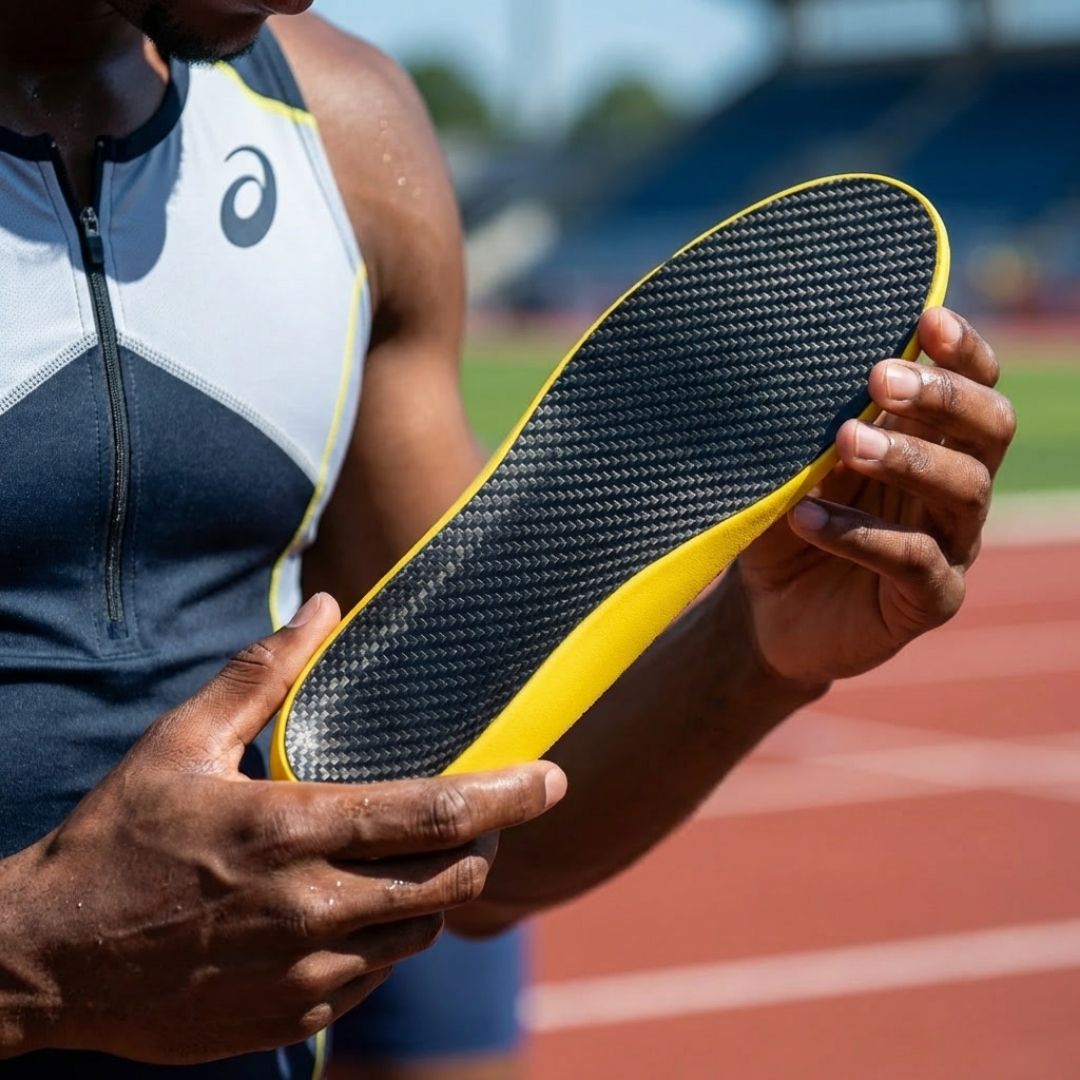
Almost everyone who wears flat shoes regularly — but a few groups feel it faster and harder:
People with flat feet or low arches. When there's no natural arch to speak of, a flat shoe offers essentially no support. The fascia is under constant tension. Pain can set in within an hour.
People who stand or walk on hard surfaces all day. Office workers, retail workers, teachers — anyone spending hours on concrete, tile, or hardwood in flat shoes. The cumulative impact without cushioning is significant.
People already dealing with plantar fasciitis or heel pain. Flat shoes are one of the worst environments for a recovering plantar fascia. An insole that offloads stress from the tissue is non-negotiable during recovery.
Anyone over a long day. Even people with structurally normal feet feel the difference by hour six or seven. Insoles for flat shoes aren't just for those in pain — they're for preventing the pain from starting in the first place.
Flat Shoes That Benefit Most From Insoles
Ballet flats. The classic offender. Zero heel, zero arch support, usually a thin leather or synthetic sole. A slim ¾ insole with arch support and a heel cup transforms the experience completely.
Loafers. A little more room than a ballet flat, which means slightly more insole options. Still need a slim profile. Look for insoles with both arch support and ball-of-foot cushioning for loafers worn through long days.
Oxfords and brogues. Often stiffer construction, which helps — but the insoles included are usually just a thin fabric liner. Replacing them with an orthotic-style insert makes a meaningful difference.
Mules and slip-ons. The real challenge here is keeping the insole in place with no heel strap. Adhesive backing is almost essential.
Sandals. Stick-on arch support cushions rather than full insoles work best here. The same principles apply — you want a contoured arch, not just gel padding.

What Semello's Insoles Do Differently for Flat Shoes
Most insole brands design for running shoes first, then scale down for everything else. The result is insoles that are too thick, too long, and built for impact loading — not the sustained pressure of wearing flats across a full day.
Semello's insoles and inserts are built around real daily wear: the kind of sustained standing and walking that flats are actually used for. The profile is slim enough to work inside ballet flats, loafers, and oxfords without changing the fit. The arch support is structured to hold up across hours — not just the first thirty minutes.
If you've tried generic insoles in flat shoes before and found they slide around, feel too bulky, or lose their shape by noon — it's worth trying something designed for the job.
Explore the full insoles and inserts collection: Semello Insoles & Inserts

The One Mistake People Make When Adding Insoles to Flat Shoes
They go too thick.
It feels like more support should mean more padding — but in a flat shoe, a thick insole does more harm than good. It changes the heel position, tightens the toe box, and puts your foot in a worse position than before.
The right insole for a flat shoe is almost invisible. You should forget it's there, except that your feet don't hurt anymore. Start slim. Start with a ¾ length. And prioritize structure over softness.
Check out our article on Best Supination Orthotic Insoles: Expert Guide & Top 7 Picks
The Bottom Line
Flat shoes don't have to hurt. But they will, if you're relying on the shoe alone to do the job that an insole should be doing.
The right insoles for flat shoes are thin enough to fit, firm enough to actually support your arch, and designed to stay in place across a full day of wear. That combination is rarer than it sounds — but it's exactly what makes the difference between "I can walk in these all day" and "I need to sit down."
Your feet are the foundation. Give them something to work with.
Find insoles built for flat shoes: Semello Insoles & Inserts