

Orthotic Insoles for Work Boots: What Changes and How to Pick
Most work boots are built around one thing: protection. Steel toe, puncture-resistant sole, ankle support — the boot is designed to keep your foot safe. Comfort comes second. In a lot of cases, it barely makes the list. That gap is exactly what orthotic insoles for work boots are supposed to close. The question is whether they actually do, and if so, which kind. Find out everything in this guide.
Why Factory Insoles Fail on Long Shifts?
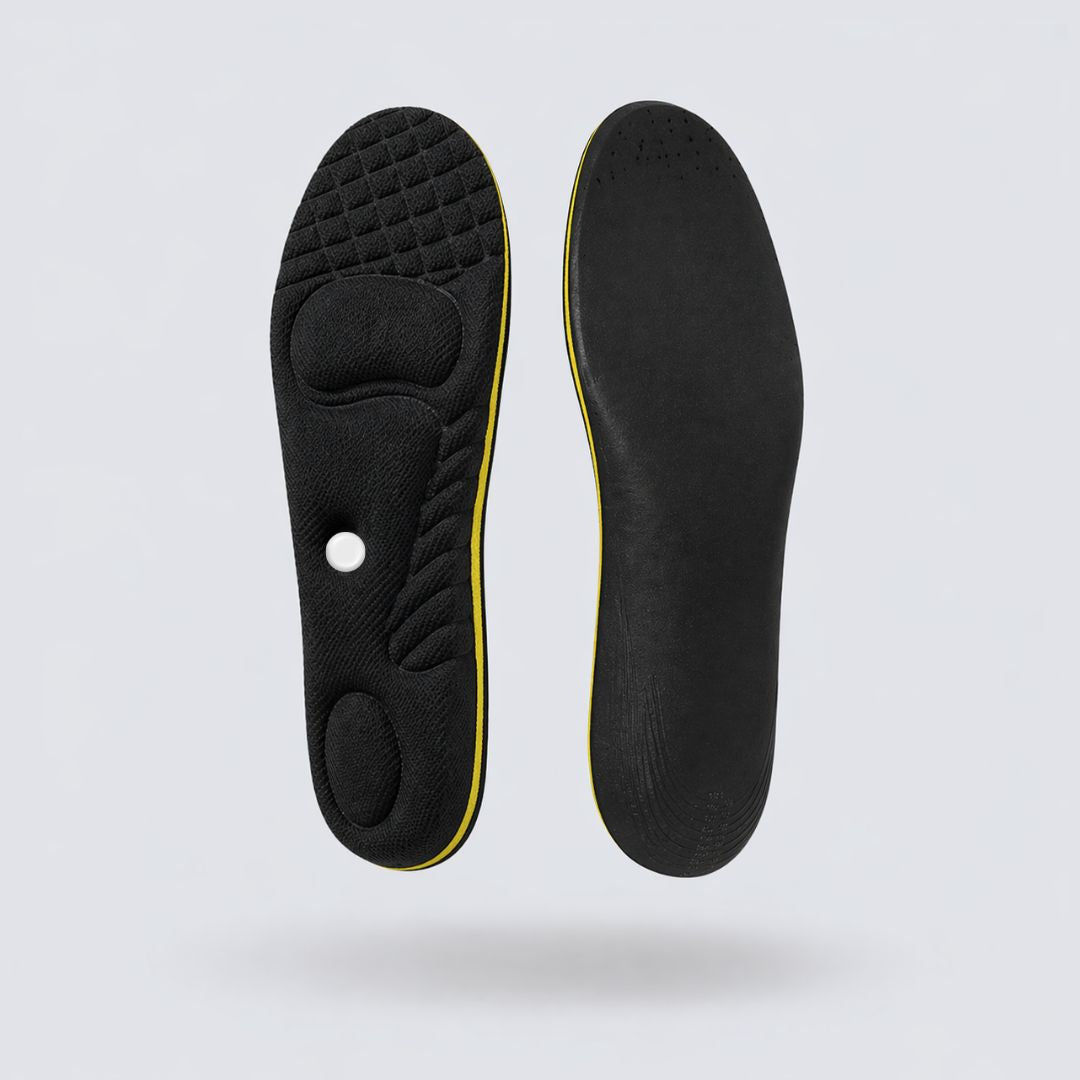
Pull the insole out of a brand-new pair of work boots and you'll often find something surprisingly thin — a flat, lightly padded liner with minimal contouring. It's enough to separate your foot from the boot's midsole, and not much else. That's fine for an eight-hour desk job. It's a different story when you're on concrete for ten hours straight.
Concrete absorbs nothing. Every step you take sends impact straight up through your foot, ankle, knee, and lower back. Over a full shift, that adds up — and the flat factory insole does essentially nothing to interrupt that chain of force. By mid-afternoon, you're not tired because of the work. You're tired because your feet have been absorbing unmanaged mechanical stress all day with no structural help.
This is what orthotic insoles are actually fixing. Not just softness — structure. The arch support, the heel cup, the contouring — these work together to distribute load across the whole foot rather than concentrating it at the heel and ball. Done right, the difference by end of shift is real and noticeable.
Check out this detailed guide: Painful Feet in the Morning: What's Causing It and How to Fix It
What "Orthotic" Actually Means for a Work Boot Context

The word "orthotic" gets used loosely. In a work boot context, it should mean a few specific things:
Structured arch support: not just cushioning under the arch, but a form that actually holds its shape when you put weight on it. Soft foam under the arch compresses when you stand and offers no more support than a flat insole. You want something semi-rigid — firm enough to support the arch through a full shift, flexible enough to move with your foot.
A deep heel cup: this cradles the fat pad under your heel and keeps it from spreading outward under load. That heel containment is what reduces the jarring sensation from heel strike on hard floors. It's also one of the key features for anyone dealing with plantar fasciitis, since controlling heel position reduces strain on the fascia.
Durable materials: most work environments are not gentle. An insole designed for cushioning a dress shoe will flatten in a week of construction site use. Materials like high-resilience polyurethane (PORON) or reinforced EVA hold up under heavy use. Whatever you're looking at, check whether it's built for high-demand environments or general everyday wear.
Full-length format: 3/4 insoles work well in thinner shoes, but work boots benefit from coverage across the entire foot. The toe box in a work boot often has extra volume, and a full-length insole fills that space, reducing the forward slide that causes blisters.
The Three Most Common Problems — and What an Orthotic Actually Fixes
Heel pain and plantar fasciitis: Plantar fasciitis is inflammation of the tissue that runs along the bottom of the foot. On hard surfaces, it's one of the most common complaints among people who work on their feet. A structured orthotic with a deep heel cup and defined arch support reduces the load on the plantar fascia by improving how the foot distributes weight during each step. It won't substitute for medical treatment if the condition is advanced, but for early or moderate cases, the right orthotic insole makes a real difference shift to shift.
Arch collapse and overpronation: Flat feet or low arches cause the foot to roll inward (pronate) as you walk. Over a long shift, that inward collapse creates strain that travels up to the knee and hip. A firm arch support corrects the foot's position and reduces that chain of stress. People with flat feet who switch to a proper orthotic often notice less knee and lower back fatigue — not just less foot pain.
General fatigue from hard surfaces: Even without a specific foot condition, standing on concrete is hard on the whole body. The shock absorption from a quality orthotic doesn't eliminate the impact, but it distributes it more evenly and reduces the cumulative strain over hours. The result isn't dramatic — it's subtle. Less soreness at the end of a shift, less recovery time overnight.
Check out this guide as well: Plantar Fascia Strain Symptoms: 7 Signs That Actually Matter
How to Choose Orthotic Insoles for Work Boots Specifically?
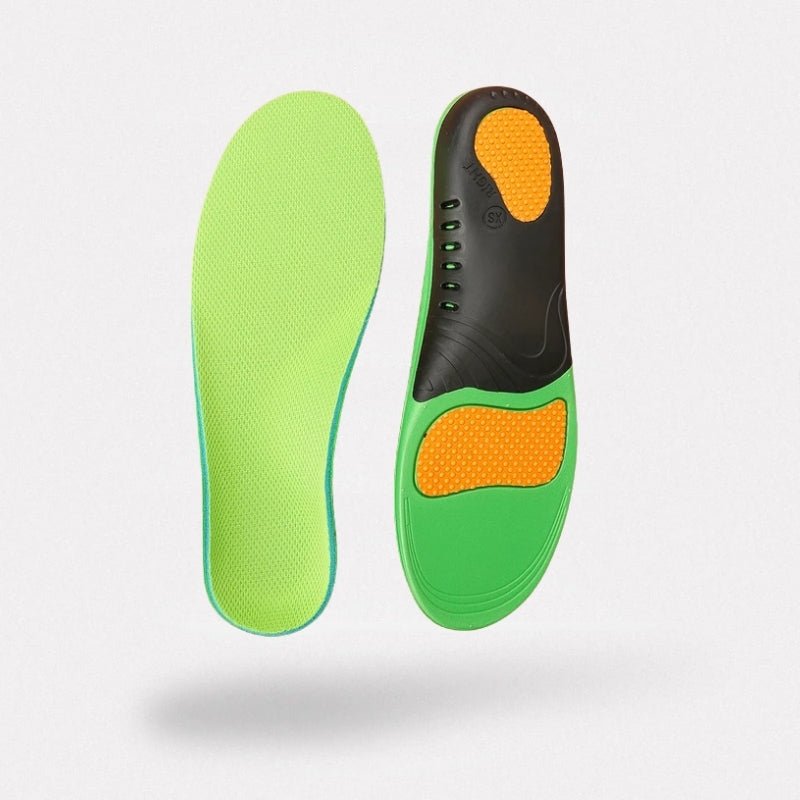
Work boots have different constraints than everyday shoes, and a few things matter here that wouldn't come up for a sneaker.
Volume and space: Work boots often have more internal volume than regular shoes, especially safety-toe models with a wider toe box. That extra room is actually an advantage: you can usually fit a proper full-length orthotic without removing the factory insole, though removing it and doing a straight swap is always the cleaner approach if the boot allows it.
Profile and boot type: Steel-toe and composite-toe boots have a fixed toe box shape. An orthotic that's too thick or too shaped at the toe end can create pressure right where you don't want it. Check the profile before buying — slimmer orthotics in the forefoot, with the main support mass at the arch and heel, work best here.
Fit by arch height: Arch support only works if it matches your arch. An insole designed for a neutral or high arch placed in a flat-footed person's boot will sit in the wrong position and may create pressure points instead of support. If you have low arches, look specifically for low-arch or flat-foot orthotics. If your arch is high, you need a correspondingly higher curve to actually make contact.
Durability expectations: In a controlled office environment, a quality insole might last 12–18 months. In a demanding work setting — heavy loads, rough terrain, constant wear — plan for replacement every 6–9 months. The insole doesn't need to look worn out to stop working properly; once the arch support flattens, the support is gone.
Check out this guide too: Bunion Pain: Causes, Symptoms & Fast Relief Solutions That Work
Semello Orthotic Insoles for Work Boots
Semello's orthotic insoles are built with the structure that factory work boot insoles skip. Defined arch contouring, deep heel cups, and materials chosen for durability rather than just softness.
For work boot use specifically, the geometry matters as much as the cushioning. Semello's orthotics are designed to sit correctly in a high-volume boot — enough forefoot coverage to prevent sliding, enough heel structure to anchor the foot under load. If you're on hard floors regularly, that combination of shock absorption and structural support is what separates a good shift from a painful one.
They're also designed to last through the kind of daily use a work environment actually demands — not just light wear testing. Browse Semello's orthotic insole collection here:

The range covers different arch heights and foot types, so you're not stuck choosing between generic sizes that don't match your actual foot.
One Thing Most People Get Wrong
Buying the thickest insole available is not the same as buying the best one.
Thickness adds cushioning, but what your foot actually needs is structure. A 12 mm foam insole that compresses flat under your weight gives you less real-world support than a 6 mm semi-rigid orthotic that holds its shape all shift long. The number you're looking for isn't the thickness — it's the firmness of the arch support and the depth of the heel cup.
If you've tried insoles before and found they "stopped working" after a few weeks, this is usually why. Soft foam insoles lose their form quickly under the weight and repetition of a full workday. They still feel softer than the factory liner, but the structural support is gone. A semi-rigid orthotic holds its geometry much longer, which is the part that actually matters.
Orthotic insoles for work boots don't fix everything — if the boot itself is wrong for your foot, no insole covers that. But for most people dealing with end-of-shift pain, heel soreness, or general fatigue from hard surfaces, the right orthotic is the fastest and most practical fix available.
Structure over softness. Full-length over partial. Semi-rigid over foam. Those three decisions alone will get you most of the way there.