

Will Insoles Make Shoes Smaller? Here's What Actually Happens Inside Your Shoe
Your shoes feel slightly too loose. Someone told you insoles would fix it. Now you're wondering whether will insoles make shoes smaller — or just make things weird. They do take up space. But the complete answer is more useful than that, and it depends on things most people don't think about before they buy.
What an Insole Does to the Inside of Your Shoe?

Drop an insole into a shoe and the floor rises. Your foot sits higher, the internal volume shrinks, and the whole feel gets snugger. For a lot of people, that's not a side effect — that's the reason they bought insoles in the first place.
How much it changes depends almost entirely on thickness and material. A thin gel or foam insert might reduce internal space by 1–2 mm. You'd barely notice. A full orthotic with a deep heel cup and defined arch support can raise your foot by 8–10 mm — close to half a size. Not necessarily uncomfortable, but definitely different from what you're used to.
There's also something most people miss: insoles don't only change height. A pronounced arch pushes the foot slightly outward, which creates a snugger feeling across the forefoot — even when the shoe's actual width hasn't changed at all. It's a positioning change, not a size change.
Do you have foot issues? Discover: Best Orthotic Arch Support Insoles: Expert Picks for Pain Relief
Can You Use Insoles to Fix a Shoe That's Too Big?
Yes. It works better than most people expect, as long as you match the insole to where the shoe is actually loose.
- Loose everywhere: A full-length orthotic fills the toe box, raises the arch zone, and anchors the heel. This is the most complete fit correction a single insert can give you.
- Slipping at the heel only: A 3/4-length insole combined with a heel grip works well here. You avoid adding bulk to a toe box that may already fit fine.
- Feels wide: Look for an insole with a defined arch and side contouring. These guide the foot inward and reduce that side-to-side drift when you walk.
One honest limit: if the shoe is more than a full size too large, no insert covers that gap. Insoles reduce the usable space inside the shoe — they don't physically shrink the shell around it. At some point the mismatch is just too big.
When Insoles Make Shoes Too Tight?

This catches people off guard more than the opposite problem. You pick up a new pair of orthotics, drop them into your everyday sneakers, and your toes are suddenly jammed against the front. Usually what happened is that the shoe didn't have much extra room to give.
Most shoes ship with factory insoles that are surprisingly thin — almost like a liner. When you replace them with a proper orthotic that has real cushioning and a heel cup, you're adding several millimeters of height that has to go somewhere.
Rigid and semi-rigid orthotics take up more consistent space than soft ones. A foam insole compresses underweight, so the effective reduction is less than it looks. A semi-rigid orthotic holds its shape: what you see before you put it in is roughly what you get after.
The fix is usually simpler than buying bigger shoes. Most running shoes and many sneakers have removable footbeds — pull the factory insole out, drop your new orthotic in, and you've done a straight swap with no net change in internal height. Worth trying before you go up a size.
Foot pain? Check this out: Best Supination Orthotic Insoles: Expert Guide & Top 7 Picks
A Quick Test Before You Commit
Remove the existing insole if it's removable. Hold your new insole next to it and compare thickness. If the new one is only slightly thicker, you're probably fine. If it's twice as thick, try the shoe on with the orthotic before deciding.
If the factory insole is glued down and won't budge, you're working with whatever space the shoe already has. In that case, go for a slimmer profile — 4–5 mm total height — rather than a full-volume orthotic.
Which Type of Insole Actually Changes Shoe Fit?
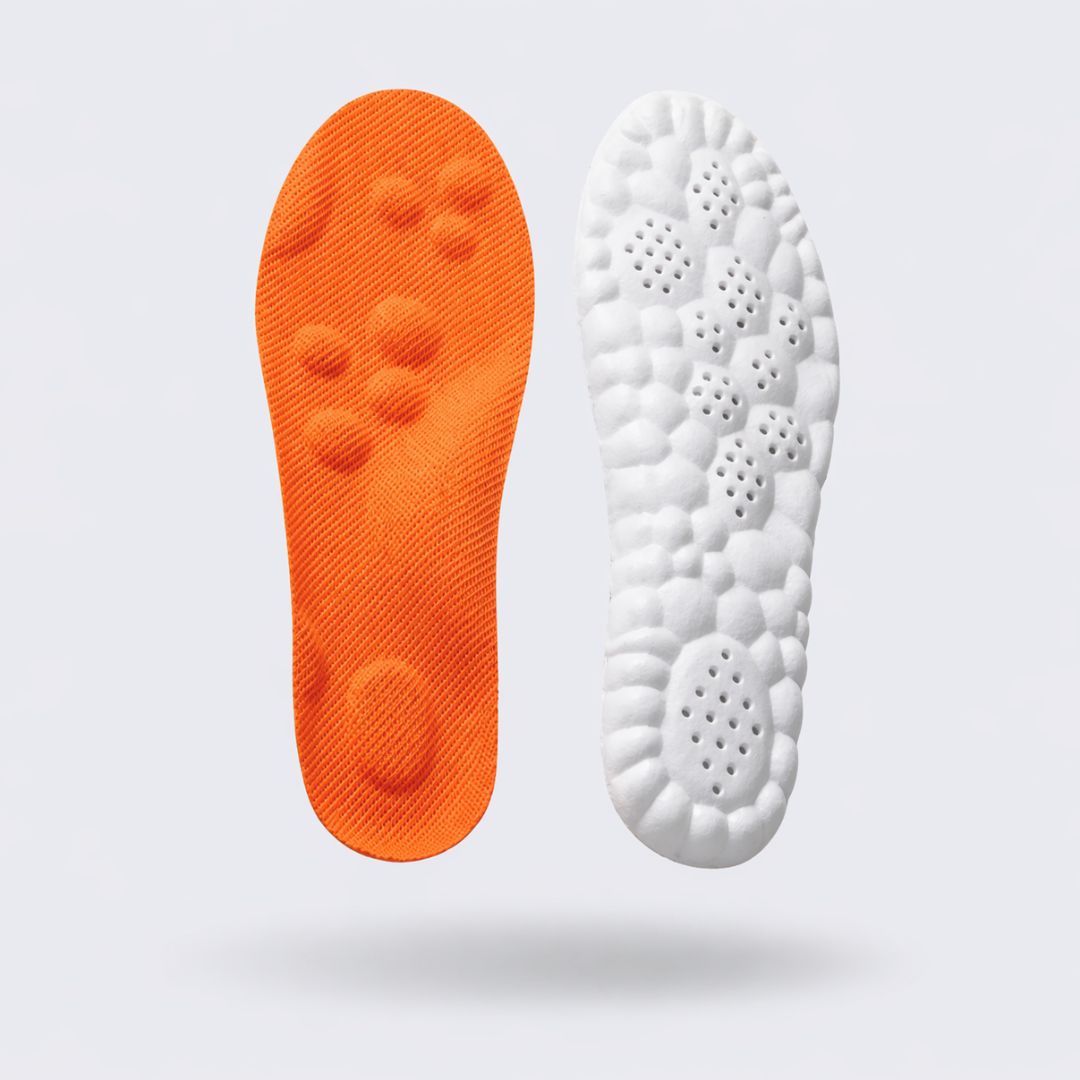
Full-length orthotic insoles do the most work when you want will insoles make shoes smaller to actually apply in practice. They fill the complete footbed, add volume at the arch and heel, and improve stability as a bonus. This is the category Semello's insole collection focuses on — orthotics built around foot mechanics, not just padding.
3/4-length insoles leave the toe box untouched. Good when the front of the shoe fits well and you only need to correct the heel and arch zone.
Gel inserts compress significantly underfoot, so they have less effect on perceived fit. Better for impact absorption than for size correction.
Heel grips and toe fillers solve specific problems but aren't insoles in the traditional sense. Use them when you have one isolated issue rather than a general fit problem.
For a shoe that just runs a bit large all over, the full-length orthotic is almost always the right call.
Semello Orthotic Insoles: Built for Fit and Support at Once
Semello's orthotic insoles aren't thick pads. They have structured arch support, deep heel cups, and contouring designed around how the foot actually sits and loads — which matters both for comfort and for how the insole interacts with the shoe.
For shoes that run a little large, that structure is a double win: it fills the excess space in a way that does something useful. You're not stuffing the shoe — you're changing how your foot sits inside it, how your weight distributes, and how stable you feel through each step. Heel slip, forefoot sliding, that vague "too much room" sensation — a well-made orthotic addresses all of it at the source.
Browse Semello's full orthotic insole collection:

The range covers different foot types and shoe profiles, from slim inserts for tighter shoes to fuller orthotics for sneakers and boots with more internal volume.
One Thing Worth Knowing Before You Buy
Some materials — softer foams especially — compress over time. The snug fit you had at first loosens after a few months of daily wear. That's normal, but it's worth knowing upfront so you're not puzzled when it happens.
Quality orthotics hold their structure longer. Semi-rigid materials and reinforced arch zones don't flatten the same way a cheap foam insert does. If you're fixing a fit problem, it pays to use something that stays fixed.
Will insoles make shoes smaller? Yes — by reducing the internal volume of the shoe. The real variable is how much. A thin cushion liner, almost nothing. A proper orthotic with structure, close to half a size. Pick the right profile for the shoe, pull the factory insole out if you need to, and most slightly-too-big pairs are completely salvageable.